Emergency Candles for Power Outages: Burn Time and Storage Math
Learn how to choose and use emergency candles during power outages. Burn time math, storage tips, and lighting strategies for blackouts.
A power outage lasting just 12 hours forces your household into darkness after sunset. If you rely on candles, you need to know exactly how many hours of light each one provides and how many you actually need on hand. Most preppers buy candles without doing the burn-time calculation—then run out halfway through an outage.
This article teaches you the specific math behind emergency candle planning, the combustion principle that determines burn time, and honest storage rules so your candles don't degrade before you use them.
How Combustion Determines Burn Time and Light Output
A candle produces light through paraffin combustion—the wax fuel burns in the presence of oxygen, releasing heat and light as a byproduct. The burn duration depends directly on three factors: the amount of wax in the candle, the wick size, and the rate of fuel consumption.
A larger wick consumes wax faster, shortening burn time. A thicker candle or candle with more volume burns longer because it contains more fuel. The wick size is set by the manufacturer, so your only control is choosing a candle with the advertised burn-hour rating that matches your actual needs.
Citronella-scented candles burn at the same rate as standard paraffin candles—the scent compound does not meaningfully change combustion speed. However, citronella serves a dual function: it provides light and simultaneously repels insects, which is valuable during outdoor power outages or in scenarios where you cannot seal your shelter completely. This dual-use feature is why citronella candles earn space in an emergency kit even though they cost slightly more than unscented options.
The key insight: burn time is determined at manufacturing, not by how you use the candle. A 16–18 hour candle will burn that duration under normal indoor conditions regardless of whether you keep the room sealed or cracked open for ventilation.
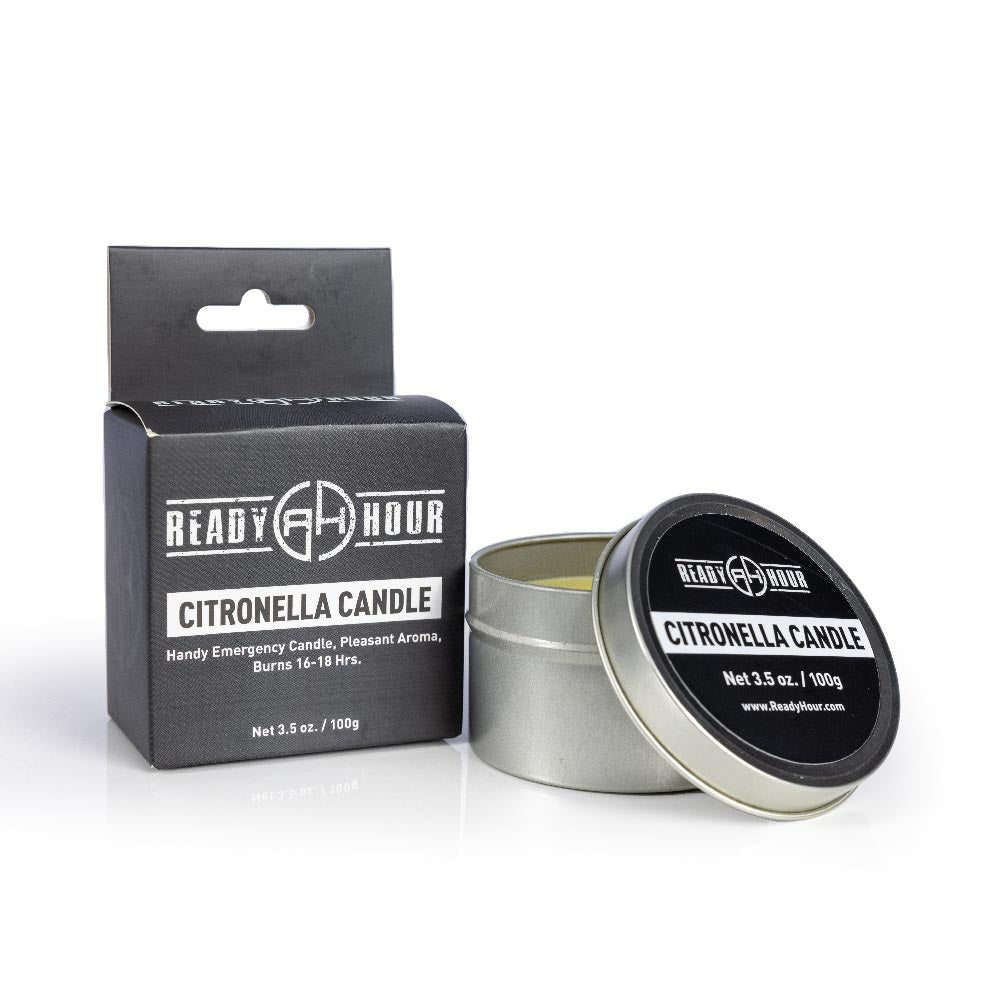
18-Hour Citronella Candle by Ready Hour
- ✓Paraffin wax combustion produces consistent light output across the full 16–18 hour burn cycle without dimming as wax depletes
- ✓One candle provides 16–18 continuous hours of working light; citronella dual-function repels insects while illuminating
- ✓Compact design fits emergency bags, vehicles, and bug-out kits without taking up storage space
- ✓Citronella scent provides insect protection that standard paraffin candles cannot—critical for outdoor outages or compromised shelters
- ✓Candles store indefinitely in cool, dry conditions; paraffin wax does not degrade like battery chemicals or fuel, making this a true long-term prep
The Math: How Many Candles You Actually Need
Calculate your candle requirement based on household size, outage duration, and daily lighting needs.
Formula: Hours of darkness per day × number of days without power ÷ burn hours per candle = candles needed
A typical winter outage in temperate climates produces roughly 12 hours of darkness daily (sunset to sunrise). A 3-day outage requires lighting for 36 hours total.
Example for a family of four:
- 3-day outage = 36 hours of darkness
- 18-hour candle ÷ 36 hours needed = 2 candles minimum
- Add 50% buffer for reshuffling, relighting, and safety margin: 3 candles per person
- 4 people × 3 candles = 12 candles for a standard 3-day outage
If you live in a region with longer winter nights (Alaska, northern latitudes), darkness can extend to 16+ hours daily. Adjust the calculation accordingly.
| Outage Duration | Daily Darkness | Total Hours | 18-Hr Candles Needed | With 50% Buffer |
|---|---|---|---|---|
| 1 day | 12 hours | 12 hours | 1 candle | 2 candles |
| 3 days | 12 hours | 36 hours | 2 candles | 3 candles |
| 7 days | 12 hours | 84 hours | 5 candles | 8 candles |
| 3 days (winter, 14 hrs dark) | 14 hours | 42 hours | 2.5 candles | 4 candles |
Multiply your per-person count by household size. A family of four preparing for a week-long winter outage needs approximately 32 candles—a specific, defensible number grounded in actual burn rates, not marketing.
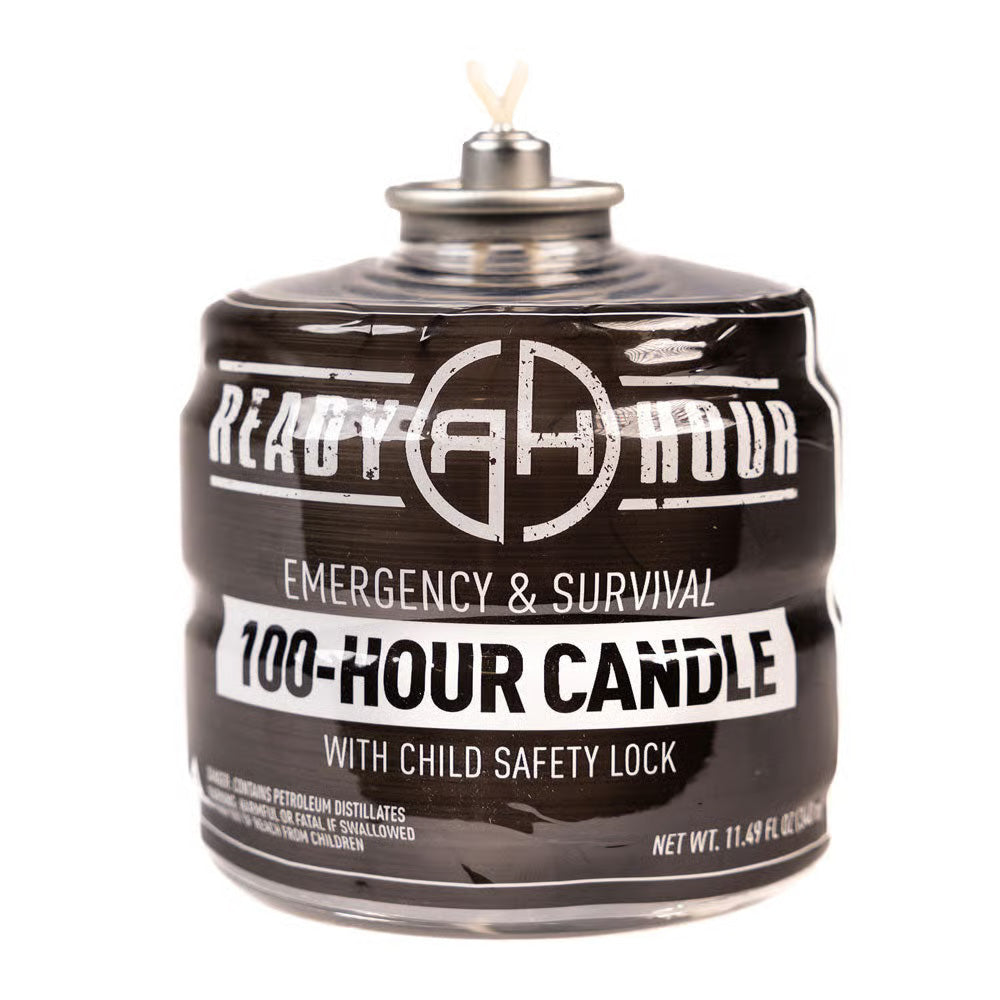
100-Hour Candle by Ready Hour
- ✓Single candle provides 100 continuous hours of light—equivalent to 5–6 standard 18-hour candles in one compact container
- ✓Consolidates lighting supply into fewer physical items, reducing storage footprint and simplifying inventory management
- ✓Extended burn duration reduces the need to relight during the night, lowering fire-safety overhead in emergency scenarios
- ✓Larger format ideal for families or group shelters where a single light source must serve multiple people
- ✓Tall cylindrical design sits securely on shelves or tables without tipping; paraffin base resists temperature changes during storage
Honest Storage and Degradation Rules
Candles store reliably in cool, dry conditions—far more reliably than batteries or fuel-based alternatives. However, three factors will degrade them before use.
Heat. Paraffin wax softens around 130–150°F and can warp, reducing structural integrity. Store candles in rooms that do not exceed 75°F consistently. Attics in summer heat, uninsulated sheds, or vehicles left in direct sun will degrade wicks and reshape candles within 1–2 seasons. A basement or interior closet is ideal.
Light exposure. Direct sunlight (especially through windows) can bleach scented candles and cause uneven melting if a candle is left on a sunny shelf. Store in opaque containers or boxes—the original packaging is usually sufficient.
Moisture. Paraffin does not absorb water, but a humid environment can cause condensation on the surface and weaken the seal of the wick. Keep candles in a dry area below 50% relative humidity. Use a small silica gel packet or desiccant pack in a sealed storage box if you live in a damp climate.
Properly stored candles maintain full burn time for 10+ years. Unlike food or batteries, there is no "use by" date tied to chemical degradation—the limiting factor is physical warping and wick integrity, both of which are controlled by storage conditions.
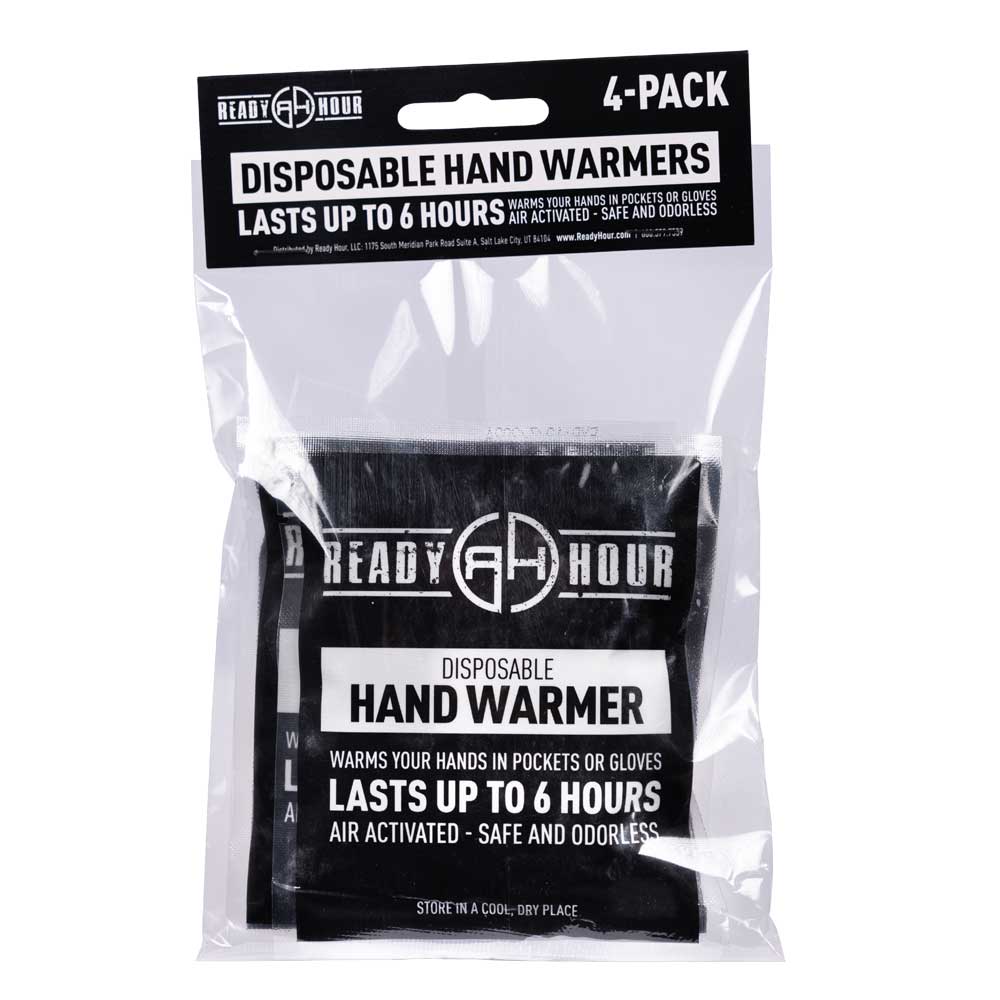
Four Pack Hand Warmers by Ready Hour
- ✓Exothermic chemical reaction (iron oxidation) produces steady heat without flame, addressing the cold-management gap candles cannot fill
- ✓Single hand warmer provides 10+ hours of warmth; four-pack supplies one person through a full winter night or four people through one evening
- ✓Complement candles in winter outages—lighting from candles, warmth from hand warmers—without relying on a single emergency solution
- ✓Activate on demand by flexing the inner metal disk; no ignition source required, eliminating fire-safety risk in confined shelters
- ✓Store indefinitely at room temperature; unlike candles, hand warmers are unaffected by light or moisture exposure
Candle Limitations and When to Choose Alternatives
Candles provide reliable light but have real constraints.
Fire safety. A lit candle requires constant attention in a household with children, pets, or in high-wind conditions. Unattended candles are a leading cause of emergency-shelter fires. In tight quarters (a single room buttoned down for insulation), oxygen depletion becomes a real concern after several hours of continuous candle burn—ventilation becomes necessary, defeating the insulation goal.
Heat output is incidental. Burning a candle produces light as its primary function; the heat output is negligible for warmth. A single candle in a room will not meaningfully raise temperature. Do not rely on candles as a heating strategy—hand warmers, insulation, and body heat are far more efficient.
Darkness management. Candles work best with reflectors or strategic placement. A single candle in the center of a room produces a small pool of light and leaves most of the space dim. For a multi-room home, you need multiple candles or a systematic relighting plan. Flashlights and LED lanterns provide superior point-of-light control and lower fire risk.
Limited burn time per candle. An 18-hour candle runs for one full day-night cycle, but if you use candles for multiple hours during the day as well as night, the count increases rapidly. Be realistic about daytime usage—especially in winter with limited natural light.
Candles are best used as a secondary lighting layer, not the sole emergency light source. Pair them with a battery-powered flashlight for tasks and movement, and use candles for ambient lighting in a single central area (living room, shelter) where fire safety can be managed.
Frequently Asked Questions
Q: How long does a typical emergency candle burn? A: Standard emergency candles burn 16–18 hours continuously. Some models extend to 100 hours through larger wax volume and slower-burn wicks. Always verify the manufacturer's burn-time rating on the label; hours vary by candle size and wick design.
Q: How many candles do you need for a 3-day power outage? A: For a family of four expecting 12 hours of darkness per day, a 3-day outage requires approximately 12 candles (36 hours darkness ÷ 18 hours per candle = 2, plus a 50% buffer for safety and relighting). Multiply by household size and adjust for your region's winter darkness hours.
Q: Can you use scented candles for emergency lighting? A: Yes. Scented candles burn at the same rate as unscented ones—the fragrance compound does not affect combustion. Citronella candles add insect repellent function without sacrificing light output, making them a smart dual-use choice. Avoid food-scented candles (vanilla, cinnamon) in long-term shelters, as the scent can become overpowering in enclosed spaces.
Conclusion
Start with your household size and your region's typical winter outage duration. Calculate the total hours of darkness you must prepare for, divide by the burn hours of your chosen candle (16–18 hours is standard), and multiply by 1.5 for a safety buffer. Buy that number, store them in a cool, dry closet, and record your inventory. This is not intuition—it is math you can verify on a spreadsheet and update as your household changes. A candle inventory sitting in your basement is useless if you do not know you have it.
Sources & Official Guidance
Authoritative further reading
This guide is for general informational purposes only and is not professional, medical, or safety advice. Always follow official guidance and, in a life-threatening emergency, call your local emergency number (911 in the US).
Mark Sutton, Lead Editor
Mark runs the editorial side of DoomsDayPreps. He digs into the research on emergency prep and survival gear, and checks anything safety-related against FEMA, CDC, and Red Cross guidance before it goes live.