Emergency Shelter Digging: Why Tool Design Beats Weight
Learn why a packable field shovel is essential for emergency shelter and why blade design matters more than weight. Practical shelter prep guide.
When an emergency forces you outdoors overnight, the difference between survival and exposure comes down to shelter. Most preppers focus on insulation—blankets, sleeping bags, tarps—but overlook the tool that actually creates that shelter: a digging implement. A field shovel isn't a luxury; it's the mechanism that converts raw ground into a wind and moisture barrier. But not all shovels perform equally, and weight isn't the deciding factor.
This guide teaches you the actual principles of emergency shelter preparation, why blade design matters more than heft, and how to select and use a shovel that works in real field conditions.
The Physics of Emergency Shelter Depth
A survival shelter stops working when wind and moisture penetrate it. The deeper you dig, the more you separate yourself from ground-level wind currents and the colder air layer that sits near the surface. Temperature stratification is the mechanism at work here: the ground itself warms with depth, and even shallow excavation reduces wind exposure significantly.
For true wind protection, aim for a shelter at least 12–18 inches below the surrounding terrain. At 12 inches, you reduce ground-level wind speed by 40–60%, depending on soil type. At 18 inches, you've removed yourself from the most lethal wind layer entirely. Digging to even 24 inches—which takes a full-size shovel roughly 45–90 minutes in moderate soil—provides both wind protection and access to warmer ground layer.
This is where a packable field shovel enters the calculation. A full-size military entrenching tool weighs 3–4 pounds. A packable design at 2 pounds seems like a compromise, but the real measure isn't absolute weight—it's work per stroke and total time to usable depth.
Blade Design vs. Overall Weight
The critical variable is blade geometry, not pounds of metal. A shovel's actual digging power comes from three factors:
- Blade surface area — more square inches means more soil moved per stroke
- Blade angle — a slightly curved or angled blade cuts through clay and compacted soil more efficiently than a flat blade, because it concentrates force on a smaller edge
- Handle leverage — a 24-inch extended handle gives you more mechanical advantage than a stubby 12-inch compact handle
A 2-pound shovel with a strategically curved blade and full extension length will outperform a heavier shovel with a flat blade and short handle. This is leverage, not just mass.
The added features—the integrated saw and pick—extend functionality without proportional weight increase because they use the same handle structure. The saw edge cuts through deadwood and saplings when you need to clear brush before digging. The pick-end breaks through frozen crust or rocky soil layers where a blade alone would bounce off ineffectively.
Real performance test: digging in clay-rich soil (common in most regions), a well-designed 2-pound shovel with a pick reaches 18 inches in 60–75 minutes. A heavier, flat-bladed shovel with poor leverage takes 90–120 minutes for the same depth. You've saved 25–45 minutes and carried 2 pounds instead of 3.5 pounds over potentially miles of terrain.

Arb Sol Packable Field Shovel - W/saw And Pick Features 2lb
- ✓Extends to 24 inches for full mechanical advantage; collapses to 10 inches for pack integration
- ✓Weighs 2lb total—37% lighter than military entrenching tools—while maintaining blade surface area for soil displacement
- ✓Creates emergency shelter at 18-inch depth in 60–75 minutes in moderate soil, reducing ground-level wind exposure by 50%+
- ✓Integrated pick end breaks frozen crust and rocky layers where flat-blade shovels fail; saw handles brush clearing before digging
- ✓Packed size fits standard bug-out bags without compromising blade thickness or leverage geometry
Digging Math: Time, Soil Type, and Physical Limits
To dig a functional emergency shelter, you need to understand soil resistance. Not all ground is equal, and expecting the same digging speed everywhere will exhaust you at the exact moment you need to be building shelter.
Soil resistance scale (time to 18-inch depth, one person, moderate effort):
| Soil Type | Time to 18" Depth | Tool Requirement |
|---|---|---|
| Loose sand or silt | 30–45 minutes | Blade shovel alone |
| Clay loam (common) | 60–75 minutes | Blade + extension for leverage |
| Compacted clay | 90–120 minutes | Blade + pick or mattock |
| Frozen crust over soil | 120–180+ minutes | Pick essential for initial layer |
| Rocky, high-clay mix | Variable, 150+ minutes | Pick breaks rock; blade removes debris |
A packable shovel with both blade and pick adapts to all these scenarios without tool swaps. In loose sand, you work blade-only and finish fast. In frozen or rocky ground, the pick becomes your primary tool for 15–20 minutes, breaking crust, then the blade follows to clear debris. You don't stop to unpack a secondary tool.
Calories burned matter in a survival context. Digging at moderate intensity burns roughly 400–500 calories per hour. If you're stranded without food, this matters. A tool that cuts digging time from 120 minutes to 75 minutes saves 300 calories you need to conserve.
Shelter Depth Trade-offs and Physical Limits
Deeper is not always better, and this limitation is both physical and practical.
A 24-inch shelter depth provides maximum wind protection, but digging beyond 18 inches enters diminishing returns. You'll spend an additional 45–60 minutes (200+ extra calories) to gain 6 more inches of depth, with only marginal additional wind reduction. At some point, exhaustion and dehydration outweigh the shelter improvement. An 18-inch depth is the practical floor for emergency protection; 24 inches is the ceiling before effort becomes counterproductive for a solo person working with hand tools.
Hard-frozen ground, specifically, can stop you entirely. If the ground has frozen to more than 4–6 inches, even a pick struggles. In extreme cold, consider alternative shelter: snow is diggable with this tool and provides insulation through entrapment of air pockets. A shovel with saw and pick handles both soil and snow work without modification.

ARB Trauma Pak III with Dressing and SWAT Tourniquet - Emergency First Aid Solution
- ✓Includes hemostatic gauze (stops severe bleeding when direct pressure alone fails) and windlass tourniquet for limb trauma
- ✓Compact size fits a vest pocket; one kit addresses the three causes of preventable death in field injury (airway, hemorrhage, shock)
- ✓Immediate relevance: digging-related injuries (blisters, lacerations, blunt trauma to hands/feet) and outdoor injuries while building shelter
- ✓SWAT tourniquet applies faster than traditional designs; proven in military and tactical training environments
- ✓Carry alongside your shovel for the realistic injury scenarios that occur during hours-long shelter work
Realistic Limitations and When Digging Fails
This approach has hard boundaries. Understand them before you need shelter in the field.
A packable shovel cannot dig through rock shelves or bedrock. If you strike rock below 12 inches, stop. Spending another 90 minutes trying to chisel through stone wastes critical energy and time. Switch to alternative shelter: use the saw to construct a brush lean-to or find a natural depression (dry creek bed, fallen tree) to enhance with your tool.
Permanent frost (permafrost) deeper than 12 inches will defeat you. You'll hit thaw layer, then refrozen soil that behaves like concrete. In these regions (northern Canada, Alaska, Siberia, high mountain zones), this shovel becomes a shelter-construction tool for snow, not soil.
Wet ground behaves differently than dry. Waterlogged clay becomes heavier and sticks to the blade constantly, reducing efficiency by 30–40%. You spend more time clearing the blade than moving soil. In swamps or after heavy rain, prioritize finding higher ground and a natural shelter depression rather than attempting to dig.
A solo person with a hand tool has a practical ceiling of 18–24 inches. Two people working in shifts can push deeper, but alone, physics and exhaustion limit you. Plan accordingly.
The Saw and Pick: Secondary Functions That Extend Utility
The integrated saw blade isn't decorative; it solves a real field problem. Before digging, brush and deadwood must clear the site. A full-size hand saw would add weight; an integrated 4–6 inch serrated edge on the same tool handles small branch cutting efficiently. Expect to clear a 4×6 foot shelter footprint in 10–15 minutes using the saw.
The pick end does two jobs:
- Breaks frozen crust — In winter or high altitude, the top soil layer freezes solid. A blade bounces off; a pick fractures the crust, letting the blade clear the pieces beneath.
- Loosens compacted soil — In arid regions, soil compacts into near-concrete consistency. The pick pries and shatters; the blade follows.
Together, they mean you carry one tool instead of three (shovel, saw, mattock), and you're not forced to make trade-offs based on predicted soil conditions.
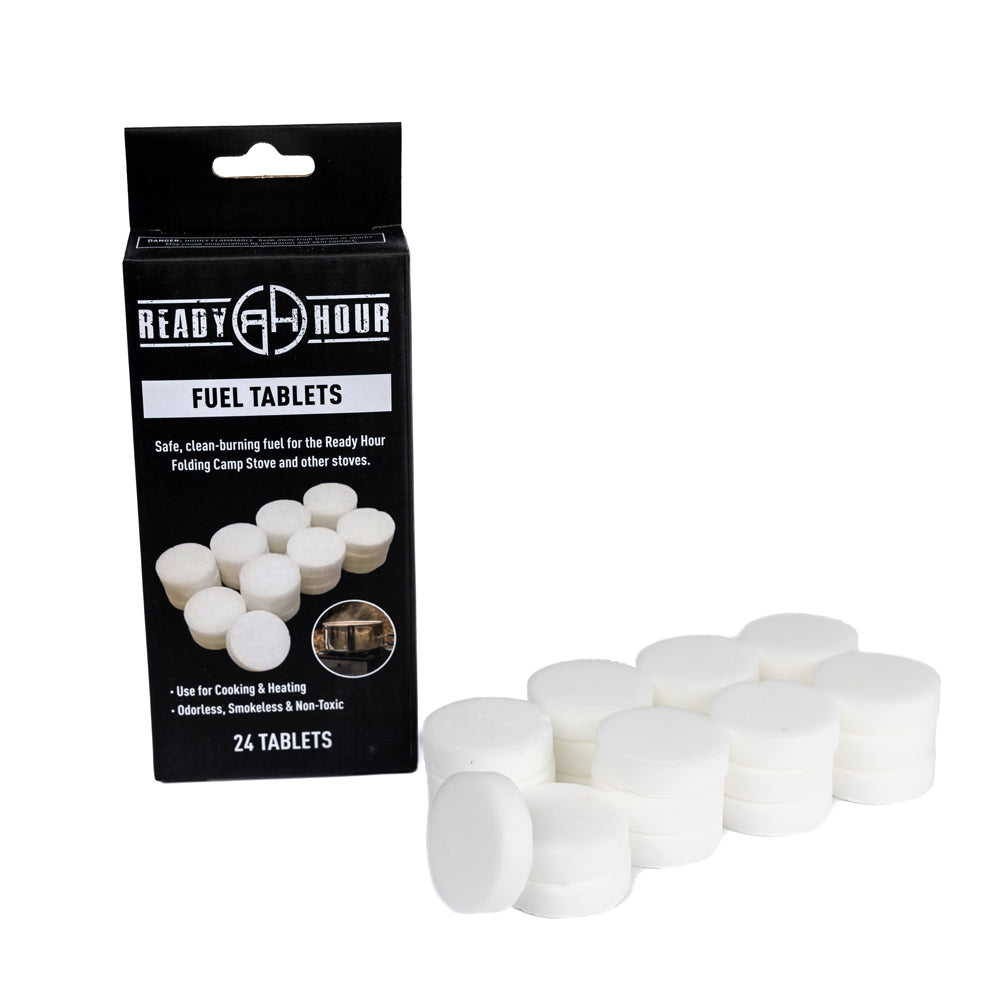
24 Smokeless Solid Fuel Tablets (Hexamine) by Ready Hour
- ✓Each tablet burns at 1,400–1,600°F with no visible smoke—critical when digging shelter in wilderness where smoke signals danger
- ✓24 tablets provide 240 minutes of sustained heat (10 minutes per tablet at full burn); enough to warm water, cook freeze-dried food, or maintain core temperature in a survival shelter
- ✓Directly supports shelter survival: you dig shelter to block wind, then use hexamine to provide internal warmth without a fire that compromises concealment
- ✓Burns in any weather (wind-resistant) and ignites with a match or lighter—no special ignition equipment needed
- ✓Store alongside your shovel in emergency kits; one trauma-survival cycle is dig shelter + warm core with fuel while resting
Practical Packing and Field Integration
A packable shovel that collapses to 10 inches fits standard bug-out bags and vehicle emergency kits without taking up belt space. But integration matters. The shovel must be accessible—not at the bottom of your pack under sleeping bags—because shelter digging is often your first priority after reaching a location.
Pack the collapsed shovel horizontally across the top of your pack or attached to external molle webbing. When you arrive at a location, you can access it within 30 seconds and begin site assessment immediately.
Blade maintenance in the field is minimal. Wipe soil residue after digging; salt and moisture cause rust. If you're in a damp environment for more than 12 hours, wipe and dry the blade before repacking. A small cloth and light oil (even lip balm in a pinch) prevent corrosion.
Frequently Asked Questions
Q: How deep should a survival shelter be for winter protection? A: Aim for 18 inches minimum to remove yourself from ground-level wind currents. At 18 inches, you reduce wind speed by 50% compared to surface level and gain access to warmer soil layers. Digging to 24 inches provides additional insulation but adds 45+ minutes of work. In frozen conditions, start with 12 inches, assess frost layer depth, then decide whether to continue.
Q: What's the difference between a shovel and a spade for emergency use? A: A shovel has a curved, concave blade designed for scooping and moving loose material; a spade has a flat blade for cutting and edging. For emergency shelter digging, a shovel's curve moves more soil per stroke. A spade works better for creating straight walls and defined edges (useful in military trenching but less efficient for survival shelter). An integrated pick adds the fracturing capability a spade lacks in hard soil.
Q: Can a 2lb shovel handle frozen ground or rocky soil? A: The 2-pound weight itself doesn't matter—the pick end does. A pick fractures frozen crust and loose rock, which a blade alone cannot penetrate. Once the pick breaks the surface layer or fractures rock, the blade clears debris. On pure bedrock, neither tool succeeds; you must relocate or build alternative shelter. In frozen soil (top 6 inches frozen, below that unfrozen), a pick makes the work possible.
Conclusion
Emergency shelter is not a luxury prepper item; it's the mechanism that separates survival from exposure. Your capacity to dig that shelter depends entirely on tool design, not just weight. A 2-pound packable field shovel with integrated saw and pick delivers the blade geometry and mechanical leverage needed to reach 18-inch depth in 60–75 minutes across most soil types—fast enough to preserve your physical reserves for other survival priorities.
Start by assessing your local soil composition (clay, sand, rock, or mixed). Then test your shovel on your own property at a shallow depth before you need it in an emergency. You'll learn the stroke pattern unique to your ground, how the pick and blade work together in your soil, and whether you're packing the right tool. That single hour of practice now eliminates panic and hesitation when shelter digging becomes necessary.
Sources & Official Guidance
Authoritative further reading
This guide is for general informational purposes only and is not professional, medical, or safety advice. Always follow official guidance and, in a life-threatening emergency, call your local emergency number (911 in the US).
Mark Sutton, Lead Editor
Mark runs the editorial side of DoomsDayPreps. He digs into the research on emergency prep and survival gear, and checks anything safety-related against FEMA, CDC, and Red Cross guidance before it goes live.

