Emergency Water Storage: Calculate How Much Your Family Needs
Emergency water storage calculator: 1 gallon per person per day. Learn the math, storage rules, and container strategy for your household.
A person can survive three weeks without food. Without water, three to four days. Emergency water storage is not optional—it's the foundation of any preparedness plan. The challenge is not deciding to store water, but calculating exactly how much and understanding what happens after you've stored it.
This guide teaches you the math, the storage conditions that preserve it, and the container strategy that prevents the most common failures.
The Baseline: How Much Water Per Person Per Day
The standard recommendation is 1 gallon per person per day. This number comes from practical experience in disaster response, not theory. Here's why it matters:
What that gallon covers:
- Drinking: ~0.5 gallons (about 2 liters)
- Cooking and food prep: ~0.25 gallons
- Basic hygiene: washing hands, face, teeth: ~0.25 gallons
This assumes normal conditions—moderate temperature, sedentary activity, no injury or medical need. During heat, physical exertion, diarrhea, vomiting, or heavy sweating, consumption doubles or triples.
Household math example:
- 2 adults + 1 child (ages 4–8): 3 people × 1 gallon = 3 gallons per day
- 3-day emergency kit: 3 gallons × 3 days = 9 gallons minimum
- 2-week supply (reasonable for power outages, supply disruptions): 3 gallons × 14 days = 42 gallons
The calculation is straightforward: multiply your household size by the number of days you want to prepare for, then by 1 gallon.
Storage Conditions That Prevent Degradation
Stored water doesn't expire the way food does, but it degrades if exposed to light, heat, or microbial contamination.
Temperature: Keep water at 50–70°F. Heat accelerates bacterial growth and degrades any plastic container. Water stored in a 90°F closet will lose quality in 6 months. The same water in a 60°F basement lasts 2–3 years.
Light: Ultraviolet light creates an environment where algae and bacteria reproduce. Opaque containers (HDPE plastic in dark blue or white, metal, or glass) are non-negotiable. Clear plastic bottles fail in weeks of sunlight.
Seal integrity: Once opened, stored water oxidizes and picks up airborne contaminants. Opened containers should be used within 48 hours or treated with unscented household bleach—6 drops per gallon, mixed thoroughly, then left for 30 minutes.
Container type matters:
- HDPE (high-density polyethylene) food-grade buckets or bottles: cheap, durable, protect against light, last 5+ years if kept cool and dark
- Glass: indefinite shelf life, will not leach chemicals, heavy and fragile
- Metal (stainless steel): indefinite, neutral pH, excellent if vacuum-insulated, more expensive
- Soft-sided collapsible bags: space-efficient for large volumes, risk of puncture, harder to rotate
Avoid PET plastic (bottle #1) for long-term storage—it becomes brittle and begins leaching over 2–3 years.
The Container Strategy: Why One Bottle Size Fails
The most common mistake is storing all emergency water in one container type. A household needs both:
Personal carry bottles for mobility and immediate access. A 32-ounce wide-mouth bottle fits in a backpack, pocket, or bag without rolling. Wide-mouth design lets you add ice, clean it thoroughly, and fill it quickly from any source. Hard-sided bottles prevent collapse under pressure and don't absorb odors.
Bulk storage containers for home reserves. Five-gallon buckets, collapsible jugs, or larger drums hold multi-day supplies efficiently. A 5-gallon bucket holds 37 pounds when full—manageable for one person but not for sustained evacuation.
Filtered reserves for extended scenarios. A 3-liter pressurized reservoir that filters as you drink combines mobility with water purification, extending the effective life of your supply.
The strategy:
- Personal bottle in each go-bag (grab-and-leave readiness)
- Bulk storage at home (3-week supply minimum in a dark, cool location)
- Filtration for scenarios where you cannot carry enough weight
Without this mix, you either run out of portable water or run out of total supply.
Rotation and Real-World Duration
Commercial emergency water (pre-treated, sealed) lasts 5+ years if unopened and stored at 50–70°F. Tap water stored in food-grade containers lasts 6–12 months before it begins to taste stale and develop an off-odor, though it remains safe if the seal is intact and light/temperature are controlled.
Rotation method:
- Label every container with the storage date
- Replace tap water annually; replace commercial emergency water every 2–3 years (not because it spoils, but to prevent hesitation when you need it)
- Use replaced water for cleaning, yard watering, or toilet filling—do not waste it
- Check seals quarterly; replace any container with visible condensation inside
A 3-person household with a 2-week supply (42 gallons) rotating annually consumes 42 gallons to household use in the next cycle. Budget 5–10 minutes quarterly for the complete check.

32 Oz Wide Mouth Water Bottle
- ✓Vacuum insulation keeps water cool for 12+ hours without ice, reducing the need to refill during active situations
- ✓32 oz capacity meets the drinking portion of a full daily ration (≈0.5 gallons) and fits standard backpack side pockets
- ✓Wide mouth opening allows ice insertion, thorough cleaning, and rapid refill from buckets, streams, or filtration systems
- ✓Hard-sided stainless steel resists crushing in a packed bag and does not absorb odors or flavors from prior contents
- ✓Compact enough for each family member to carry independently—a go-bag essential that children can operate without adult assistance
What Emergency Water Storage Cannot Do
Water storage solves supply problems, not quality problems. Stored water protects against temporary outages (24–72 hours), supply disruptions (floods, contamination events), and evacuation scenarios (carry multiple gallons with you).
It does not protect against:
- Chemical contamination (industrial spill, gas leak): stored water is already contaminated if the source was compromised before storage
- Biological contamination from handling (if a container is opened with contaminated hands): requires filtration or treatment, not storage
- Saltwater or seawater scenarios: desalination requires specialized equipment, not storage
- Extreme exertion or medical conditions: a person with fever, severe burns, or heavy hemorrhage may need 3–5 gallons per day, not 1
Children under age 1 should not drink stored tap water—boil it first, or use bottled water intended for infant consumption.
People with diarrhea or vomiting may need IV rehydration; water alone is not sufficient treatment. Stored water is a foundation, not a solution for every scenario.
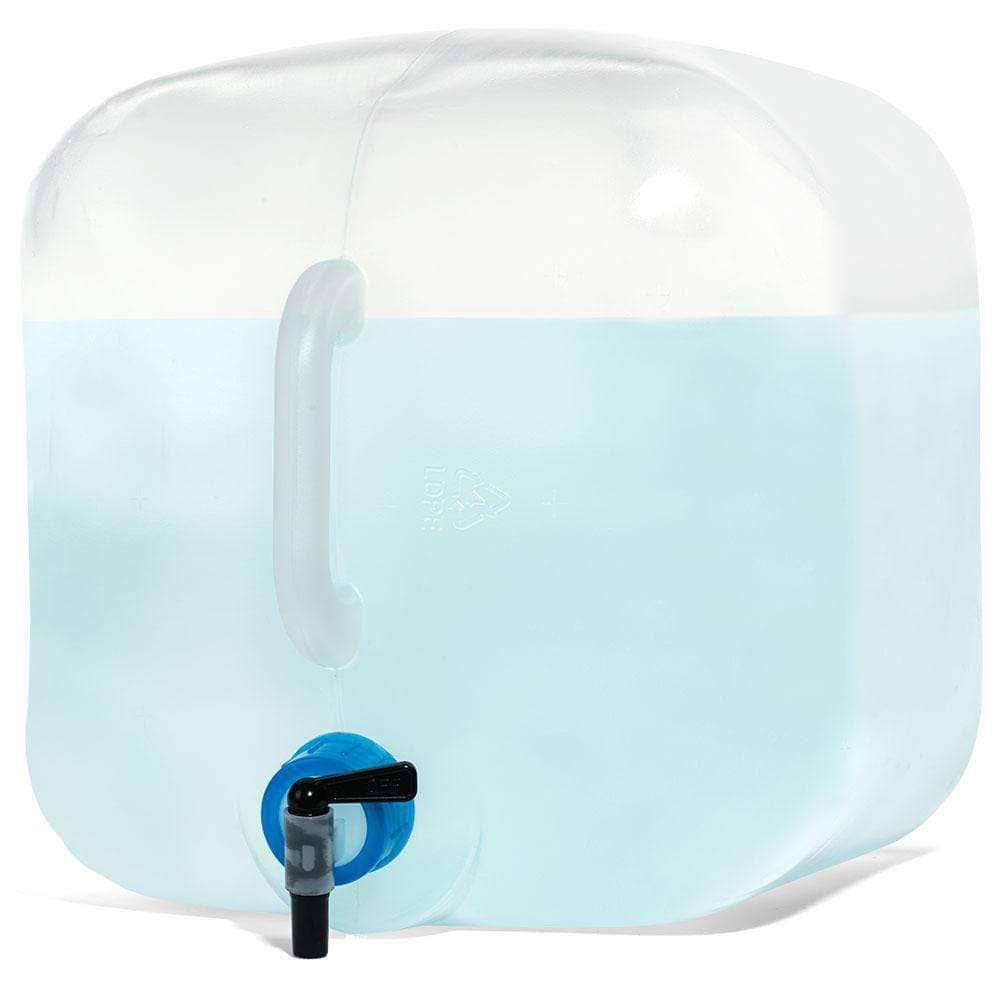
5 Gallon Collapsible Water Container by Alexapure
- ✓Collapsible design reduces storage footprint from 1.2 cubic feet (rigid bucket) to <0.1 cubic feet when empty, freeing space for other supplies
- ✓5-gallon capacity (37 lbs when full) covers one person's water need for 5 days or a household of 3 for 1.67 days
- ✓Carries like a backpack with handles and can be stacked flat in closets, under beds, or inside larger bins without wasting drawer space
- ✓Food-grade plastic resists leaching and light degradation; doubles as a collection container during rainwater scenarios
- ✓Pairs with bucket lids or pump systems for gravity-fed filtration and organized rotation tracking
Water Purification Extends Emergency Supplies
If your stored water runs out before resupply, purification allows you to use untreated sources. Boiling kills pathogens but consumes fuel. Chemical treatment takes time. Filtration is portable and does not rely on fuel or chemicals running out.
A pressurized filtered reservoir lets you drink directly from questionable sources without first carrying that water weight. This is not a replacement for stored water—it extends the duration of your supply by letting you supplement from creeks, rain barrels, or pool water as a secondary source.
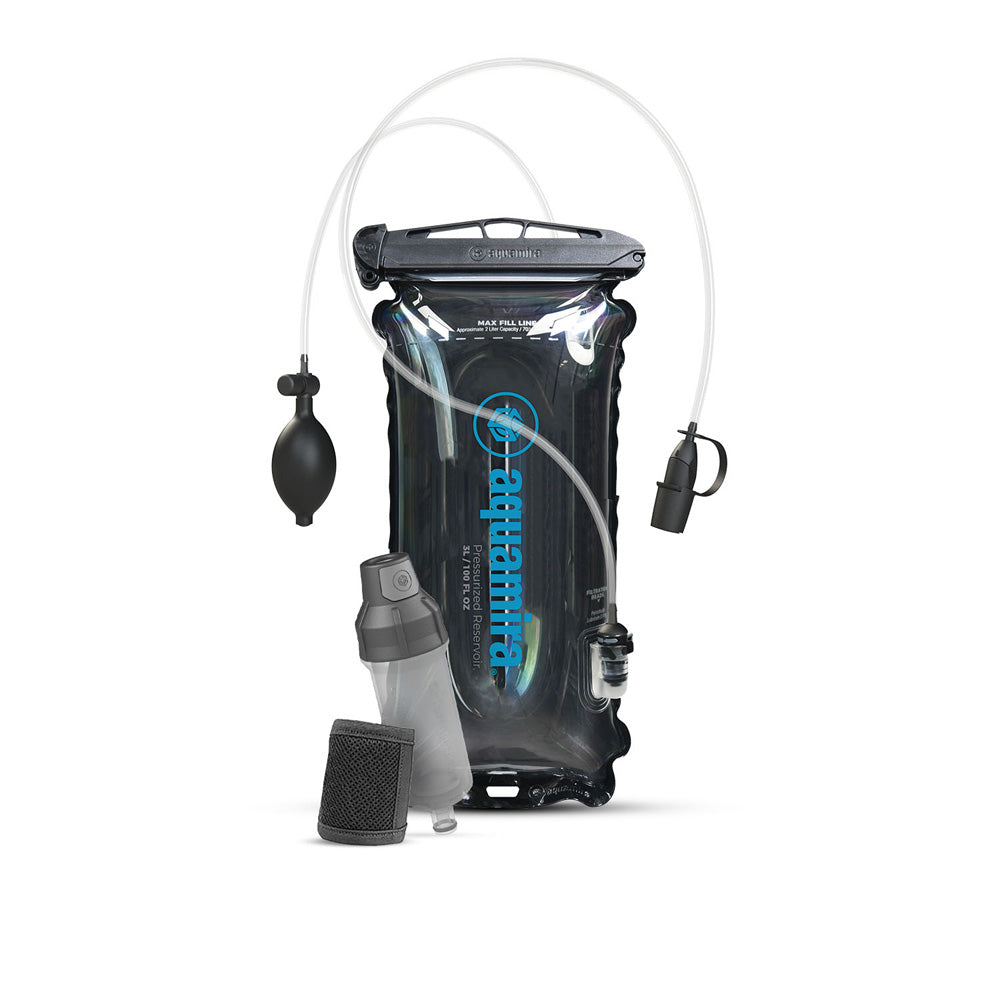
Aquamira 3L Pressurized Filtered Reservoir
- ✓Activated carbon and microbial filters remove taste, odor, sediment, bacteria, and parasites—covers 95% of contamination risk without boiling
- ✓3-liter capacity (0.79 gallons) means one person refills once every 1.5 days, reducing exposure to contaminated sources
- ✓Pressurized system allows hands-free drinking through an integrated tube, preventing splashing and cross-contamination
- ✓Rated for 100+ gallons of filtration per cartridge before replacement—a single cartridge (under $20) extends your effective supply by weeks
- ✓Flexible bag structure packs flat in a side pocket and does not require the weight of a rigid bottle when partial
Frequently Asked Questions
Q: How long can I leave tap water in a sealed container before it needs replacing? A: Sealed tap water in food-grade containers stays microbiologically safe for 6–12 months at 50–70°F, but begins to taste stale (flat, oxidized flavor) around 6 months. Replace it annually for palatability, not safety. Label containers with the date and use older water for non-drinking purposes during rotation.
Q: Can I store water in used 2-liter soda bottles? A: Not for long-term storage. PET plastic (#1) becomes brittle and begins leaching chemicals after 1–2 years. Use them for short-term (2–4 week) reserves only. For anything longer, use HDPE food-grade jugs, stainless steel, or glass. The cost difference is minimal; the risk is significant.
Q: What do I do if I live in an apartment with no basement or cool closet? A: Store water in the coolest available space—under a bed, in a north-facing closet, or against an exterior wall away from radiators. If temperature stays above 75°F, replace tap water every 6 months instead of 12. Collapsible containers allow you to use dead space (behind furniture, under sinks) that rigid buckets cannot fit. Even 15–20 gallons stored this way is better than nothing.
Conclusion
The calculation is simple: multiply your household size by the number of days, then by 1 gallon. A family of four preparing for a 2-week outage needs 56 gallons. Store it in multiple container types—personal bottles for mobility, bulk containers for volume, and a filter for when reserves run low. Keep water in a cool, dark place and rotate annually. This foundation solves the majority of emergency scenarios without requiring complex purification or rationing. Your first action is to measure your closet or storage space and order enough containers to meet your 3-day minimum this week.
Sources & Official Guidance
Authoritative further reading
This guide is for general informational purposes only and is not professional, medical, or safety advice. Always follow official guidance and, in a life-threatening emergency, call your local emergency number (911 in the US).
Mark Sutton, Lead Editor
Mark runs the editorial side of DoomsDayPreps. He digs into the research on emergency prep and survival gear, and checks anything safety-related against FEMA, CDC, and Red Cross guidance before it goes live.
