Hexamine Fuel Tablets for Emergency Cooking: How They Work and Why They Matter
Hexamine fuel tablets provide smokeless emergency cooking heat. Learn how they work, calculate burn time, and prepare a reliable backup fuel system.
When the grid fails, cooking becomes your first survival problem. A hexamine fuel tablet works through a simple combustion principle: solid fuel burns without requiring liquid fuel or electricity, producing heat directly from chemical oxidation. Understanding how these tablets actually function—not just that they burn—lets you calculate realistic emergency cooking capacity and avoid dangerous mistakes.
Most preppers overlook fuel entirely, assuming they'll use a gas stove or campfire. But gas canisters fail in cold, campfires aren't always safe indoors, and solid fuel tablets work in conditions where other ignition sources don't. This article teaches you the mechanism behind hexamine combustion, how to calculate burn time for your household size, and how to build a complete backup cooking system.
How Hexamine Tablets Burn: The Combustion Mechanism
Hexamine—the active chemical compound—is a solid organic compound (C₆H₁₂N₄) that undergoes exothermic decomposition when ignited. Unlike wood or candles, hexamine burns without visible flame or smoke because it oxidizes completely at the molecular level, converting directly to heat, carbon dioxide, and water vapor.
Here's what happens physically: A burning tablet reaches a surface temperature high enough to sustain combustion (~500–700°F), but the reaction is contained within the tablet itself. Oxygen in the surrounding air reaches the fuel surface through the solid's porous structure, causing chain-reaction oxidation. This is why hexamine produces minimal smoke—there's no incomplete combustion creating soot or ash. The tablet shrinks as it burns, eventually leaving almost no residue.
This matters for emergency cooking because:
- No visible flame means you can use it in low-light situations without attracting attention
- Minimal smoke allows indoor use in well-ventilated spaces (though outdoor use is always safer)
- Stable heat output means a tablet burns at a consistent rate, making cooking time predictable
- No liquid spillage eliminates the risk of fuel contamination in a bug-out situation
The key limitation: hexamine produces heat through surface oxidation only, so wind, moisture, or poor airflow reduces burn time significantly. A wet tablet or one exposed to heavy wind may go out before consuming fully.
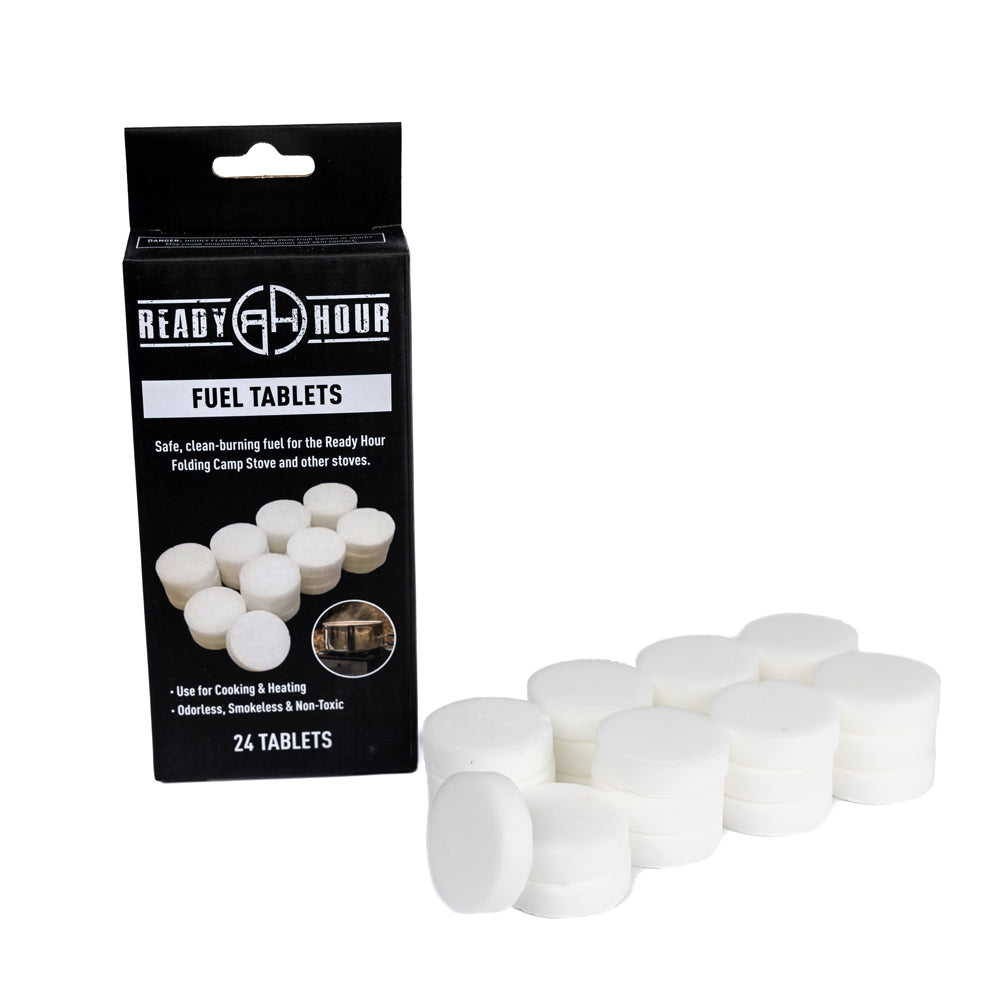
24 Smokeless Solid Fuel Tablets (Hexamine) by Ready Hour
- ✓Hexamine solid fuel oxidizes completely, producing heat without smoke or visible flame for safe emergency cooking
- ✓Each tablet burns approximately 5–7 minutes at full heat output; 24 tablets = 120–168 minutes (2–3 hours total cooking fuel)
- ✓Ideal for heating water for meals, dehydrated food, or canned goods during power outages or off-grid scenarios
- ✓Burns without electricity, liquid fuel, or complex ignition—a single match or lighter starts combustion instantly
- ✓Store in airtight container in cool, dry location; shelf-stable for years without degradation
Calculating Emergency Fuel Needs: The Math You Need
The number of hexamine tablets required depends on three variables: household size, cooking frequency, and meal type. Here's how to calculate your actual needs.
Step 1: Determine daily cooking heat needed.
- One adult preparing three meals per day needs roughly 15–20 minutes of sustained heat (boiling water, heating canned goods, warming dehydrated meals)
- Two adults: 25–30 minutes per day
- Family of four: 40–50 minutes per day
Step 2: Calculate tablet requirements. At 5–7 minutes per tablet, assume 6 minutes as your working average:
- One adult: 3 tablets per day (18 minutes cooking time)
- Two adults: 5 tablets per day (30 minutes)
- Family of four: 8 tablets per day (48 minutes)
Step 3: Multiply by duration. For a 3-day emergency (minimal power, no outside cooking):
| Household | Daily tablets | 3-day total | 7-day total | 14-day total |
|---|---|---|---|---|
| 1 adult | 3 | 9 | 21 | 42 |
| 2 adults | 5 | 15 | 35 | 70 |
| Family of 4 | 8 | 24 | 56 | 112 |
A 24-tablet pack covers one family of four for exactly 3 days at standard cooking frequency. For longer emergencies or larger households, you need multiple packs—or a complementary fuel source.
Real-world adjustment: If your emergency meals are mostly "heat and eat" (canned soup, instant oatmeal, boiled water for coffee), you're at the lower end of the range. If you're preparing bulk dried goods or need water purification heat, add 20–30% more tablets.
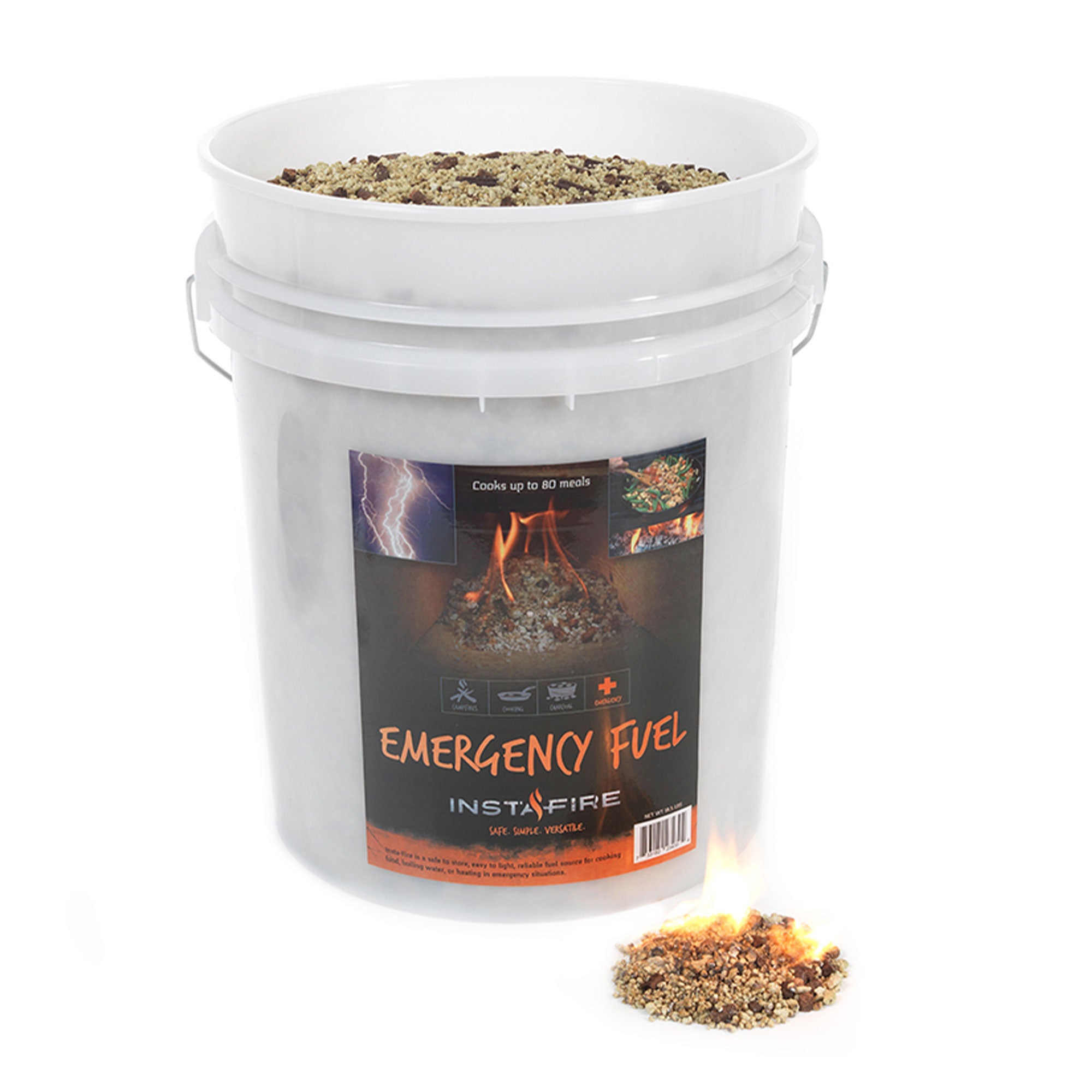
Fire Starter & Fuel by InstaFire (5-Gallon Bucket) |
- ✓Granular fire-starter fuel ignites in wet conditions and burns hotter than tablets, extending heat output per unit of fuel
- ✓5-gallon bucket contains approximately 15–20 pounds of material; one handful (~50g) burns 10–15 minutes, providing 50+ cooking fires
- ✓Complements hexamine tablets by offering redundancy—if tablets run out, granular fuel extends your cooking capacity significantly
- ✓Works in rain or snow where tablet-only systems might fail due to moisture exposure
- ✓Store bucket sealed in cool location; shelf-stable indefinitely without degradation
Real-World Limitations: When Hexamine Fails You
Hexamine tablets work reliably in specific conditions. Knowing their failure points prevents dangerous assumptions.
Moisture is the enemy. A damp or wet tablet may not ignite or will sputter and extinguish prematurely. Store tablets in airtight containers with desiccant packets. Once opened, use tablets quickly or seal them immediately—exposure to humidity reduces burn time by 30–50%.
Wind kills burn time. A tablet burning in open air on a windy day produces 50–70% of its normal heat output. This matters if you're cooking outdoors during an emergency. A simple windscreen (rocks, a metal can, or a commercial camping stove reflector) restores nearly full output.
Tablets don't work well in heavy rain or snow. If your emergency involves prolonged precipitation and you're relying entirely on hexamine for cooking heat, you'll face problems. A tarp, camping stove tent, or sheltered cooking area becomes mandatory.
They produce less total energy than liquid fuels. One hexamine tablet releases roughly 3,000–4,000 kilocalories of heat energy. One ounce of camp stove fuel (liquid isopropyl or butane blend) releases approximately 12,000–15,000 kilocalories. For long-term emergencies (2+ weeks), tablets alone are insufficient—you need a liquid fuel backup or a fire-making system.
Indoor use requires extreme caution. While hexamine produces minimal smoke, burning it in a sealed room can deplete oxygen and raise carbon dioxide to unsafe levels. Never use hexamine tablets in a car, tent, or fully enclosed space without active ventilation. The "minimal smoke" claim does not mean "safe to burn indoors indefinitely."
Tablet breakage during transport. Hexamine is brittle. Tablets crack easily if dropped or jostled during a bug-out. Store them in a rigid container, not a soft pack.
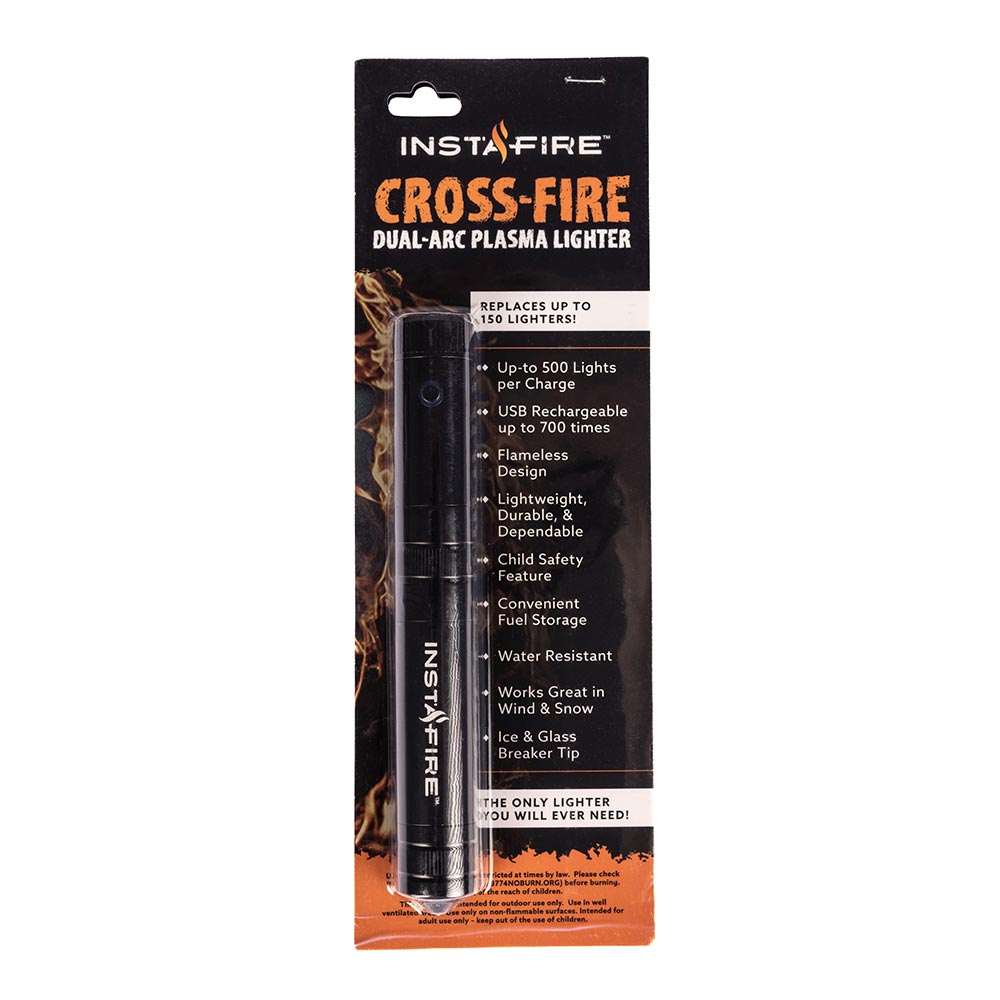
CROSS-FIRE® Dual-Arc Plasma Lighter by InstaFire
- ✓Plasma arc ignition works in wind, rain, and cold where standard lighters fail—ensuring your hexamine tablets light when you need them
- ✓Charges via USB and holds charge for 100+ ignitions; no fuel to leak or freeze, no butane pressure loss below freezing
- ✓Dual-arc design ignites wet kindling and solid fuels instantly, critical for reliable backup ignition when commercial matches are wet or exhausted
- ✓Weatherproof and works from sea level to high altitude, unlike butane lighters that lose pressure above 8,000 feet
- ✓Compact and lightweight; stores indefinitely without degradation
Frequently Asked Questions
Q: How long does one hexamine fuel tablet burn? A: A single tablet burns for approximately 5–7 minutes at full heat output under ideal conditions (dry, windless environment). Working with an average of 6 minutes per tablet allows predictable meal planning. Wind, moisture, or moisture exposure reduces this to 3–4 minutes. Do not assume 7 minutes in outdoor conditions—plan conservatively.
Q: How many hexamine tablets do I need for a 3-day emergency? A: For one person preparing three meals daily, plan 9 tablets (3 per day × 3 days). For a family of four, plan 24 tablets (8 per day × 3 days). A standard 24-tablet pack is sized for exactly one family of four over three days. If you have children under 12 or plan to boil water for purification, add 6–8 tablets to your total. Households with multiple adults should stock two packs.
Q: Can hexamine tablets be used indoors or in enclosed spaces? A: Hexamine produces minimal smoke, but it should not be burned in sealed rooms, tents, or vehicles. The combustion process consumes oxygen and produces carbon dioxide—even with minimal visible smoke, prolonged indoor burning creates a suffocation hazard. Use hexamine outdoors or in well-ventilated spaces only (windows open, doors propped, active air exchange). Never use in a sealed tent or car, even during extreme cold.
Build Your Backup Cooking System Today
Hexamine tablets work because they separate fuel from ignition—you control when heat is produced, not weather or equipment failure. Start with a 24-tablet pack and store it alongside waterproof matches or a plasma lighter. Calculate your household's actual cooking needs using the table above, and add one extra pack for every two days of planned emergency beyond three days.
The single most important step: store your tablets in an airtight container with a desiccant packet, separate from your emergency food supply. Test one tablet outdoors to see how it burns before an actual emergency—this takes five minutes and eliminates the guesswork.
Sources & Official Guidance
Authoritative further reading
This guide is for general informational purposes only and is not professional, medical, or safety advice. Always follow official guidance and, in a life-threatening emergency, call your local emergency number (911 in the US).
Mark Sutton, Lead Editor
Mark runs the editorial side of DoomsDayPreps. He digs into the research on emergency prep and survival gear, and checks anything safety-related against FEMA, CDC, and Red Cross guidance before it goes live.