How to Signal for Rescue in an Emergency (Whistle & Visual Methods)
Learn how to signal for rescue using whistles and visual methods. Master the difference between distress and non-distress signals — skills that work when electr
When cell service fails, GPS dies, or you become lost or trapped, the ability to signal for help becomes your most direct line to rescue. Most preppers stockpile supplies but skip the foundational skill: how to actually be found. The physics of sound and visibility, combined with standardized rescue protocols, mean that a whistle in your hand right now is worth more in practice than a thousand dollars of gear you cannot deploy when you need it.
This guide teaches you the real mechanics of emergency signaling—what works, what doesn't, the specific patterns rescuers are trained to recognize, and the skills that bridge the gap between owning a whistle and using it correctly.
How Sound and Visibility Work in Search and Rescue
Rescue teams operate on two detection principles: audio location and visual confirmation. Your job is to exploit both.
A human voice peaks around 60–70 decibels at normal speaking distance and carries perhaps 100–200 yards in ideal conditions. A survival whistle generates 80–120+ decibels depending on design and lung power, and that concentrated, high-frequency sound travels farther and penetrates obstacles better than the human voice. The reason: a whistle's frequency (typically 2,000–4,000 Hz for signal whistles) cuts through wind noise and ambient sound more effectively than lower-frequency voice sounds.
However, distance deceives. A whistle that "carries for a mile" in calm lab conditions might carry 500 yards through forest, less through rain or snow, and almost not at all if your rescuer is indoors, in a vehicle, or wearing hearing protection. The skill is not "blow the whistle once and wait"—it is sustained, patterned signaling that makes your location searchable.
This is why standardized distress patterns exist. A rescuer hearing three short bursts, three long bursts, three short bursts (the international Morse SOS pattern) knows immediately that this is a distress signal, not a birdcall or equipment malfunction. A random whistle blast is noise. A patterned signal is intent.
The Three Distress Signal Patterns You Need to Know
Three-Three-Three Rule (Morse SOS)
Three short blasts, pause, three long blasts, pause, three short blasts. Repeat every few minutes. This pattern is recognized globally across air-sea rescue, hiking search-and-rescue (SAR) teams, and emergency protocols. A short blast is one second or less; a long blast is two seconds. The pause between groups is roughly two seconds.
Three-Minute Rule (Continuous Signaling)
In some wilderness SAR protocols, continuous signaling for three minutes (whistle or mirror), followed by a three-minute silence, signals distress. The silence allows rescuers to listen for responses. If you are sheltering in one location, this pattern preserves your energy while demonstrating persistence.
Mirror Flash Pattern (Three Flashes)
Visual signaling follows the same logic. Three flashes (one second on, one second off, repeated) from a mirror, flashlight, or reflective surface also transmits the distress intent. A mirror in bright sunlight is visible for miles; a flashlight at night carries one-half to two miles depending on terrain and beam strength.
The key insight: rescuers are listening and looking for patterns, not random noise. A single whistle blast means nothing. Three deliberate blasts, repeated, means "find me."
The Three-Second Rule: Energy vs. Detection
A survival scenario often means limited calories, hypothermia risk, and the possibility of many hours waiting for rescue. Continuous signaling drains you. The practical approach:
- Signal for 3 minutes continuously (whistle every 2–3 seconds, or sustained mirror flashing)
- Pause for 3 minutes, listen for response
- Repeat
This cycle preserves your energy while producing enough acoustic and visual output to be detected. A lost hiker or avalanche victim can sustain this rhythm for 8–12 hours before exhaustion becomes the limiting factor. Rescuers, once they enter the search grid, are actively listening for these repeating patterns.
Never assume one signal attempt is enough. In dense forest or during high wind, a single three-second burst is statistically invisible. Repetition over time is what creates a searchable signal.
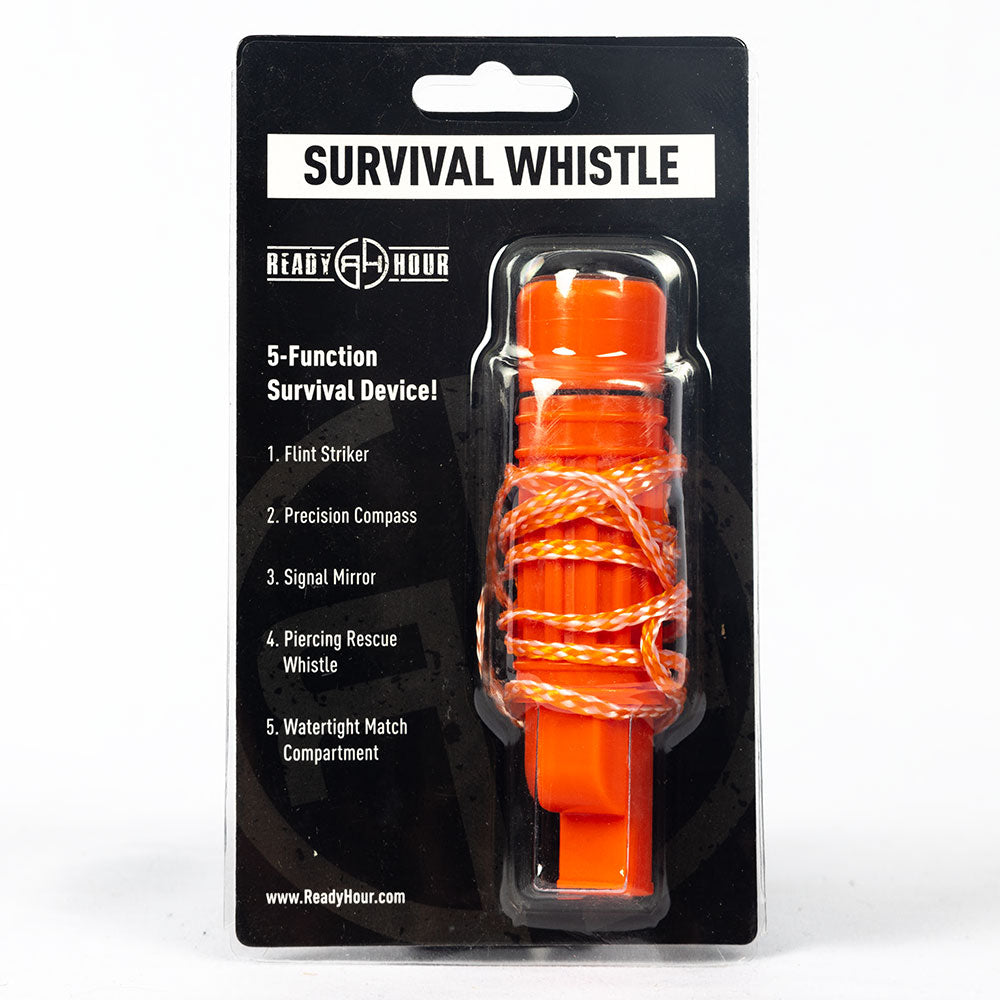
5-in-1 Survival Aid Tool and Whistle by Ready Hour
- ✓High-frequency pea whistle design cuts through wind and ambient noise better than voice alone, reaching rescuers at distance while minimizing effort
- ✓Waterproof matchbox stores tinder and fire-starting materials; flint and steel provide ignition without batteries or fuel dependency
- ✓Signal whistle combined with compass and fire-starting tools covers three rescue priorities: audio location, navigation, and heat/visibility (via fire)
- ✓Integrated lanyard keeps the tool accessible and prevents loss in panic or low-visibility conditions
- ✓Pea design creates reliable sound even when wet or at altitude, where butane lighters and electronic devices fail
Visual Signaling: The Mirror Advantage
A signal mirror (or any reflective surface) is the highest-return signaling tool in daylight. Why? Physics: sunlight reflecting off a small mirror is visible for 10+ miles in clear conditions, while a whistle rarely carries farther than 1–2 miles.
How to use a signal mirror:
- Hold the mirror at arm's length, between you and the sun
- Align the reflected light with your target (aircraft, vehicle, distant ridge)
- Flash in short bursts: one second on, one second off—the three-flash distress pattern
- Sweep the mirror in wide arcs to maximize the chance a rescuer will see the flash
Many preppers mistake the mirror for a navigation tool. Its real value is signaling. A 2-inch × 3-inch mirror costs almost nothing, weighs less than one ounce, and requires no power. In daylight, it outperforms everything except direct line-of-sight to a rescuer.
If you lack a mirror, use any shiny surface: a phone screen, a tin can, aluminum foil, even water in a metal cup. The principle is identical—bounce sunlight toward your rescuer.
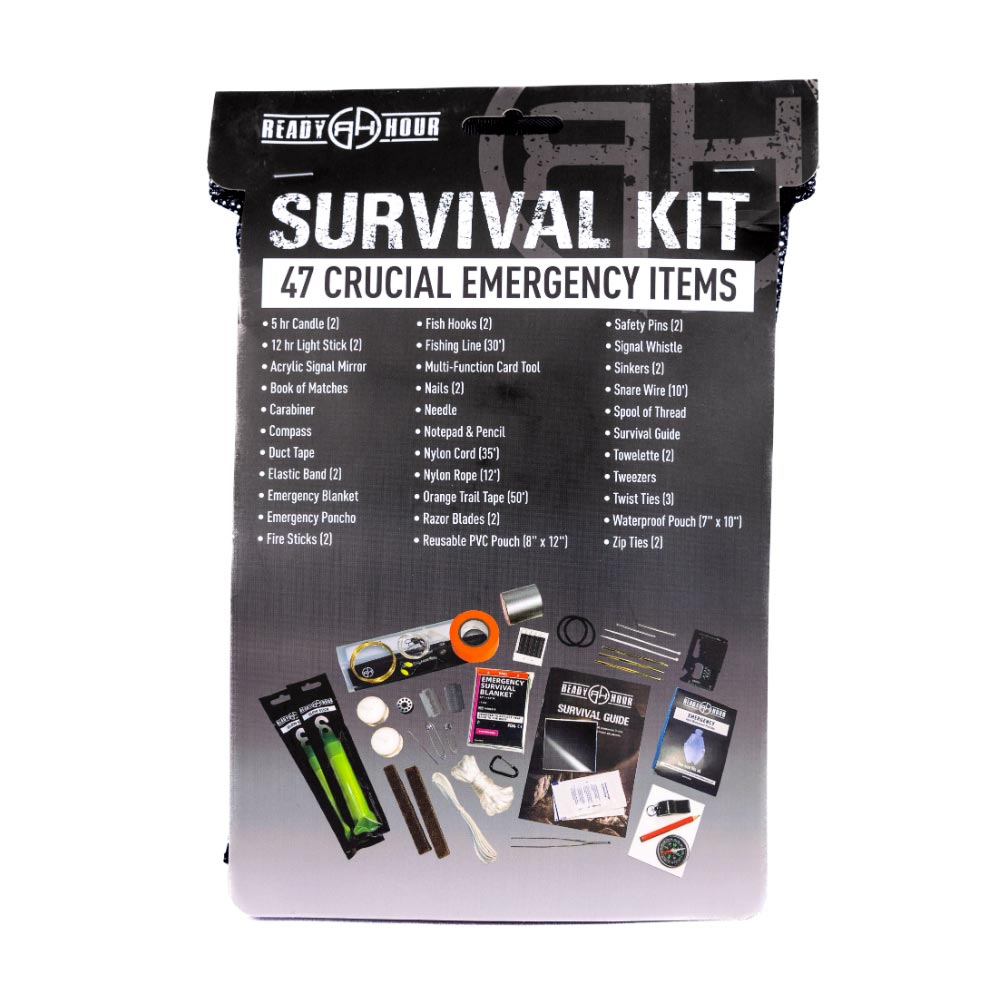
47-Piece Survival Kit of Emergency Items by Ready Hour
- ✓Includes signal whistle, signal mirror, and multiple fire-starting tools—three independent signaling methods in one kit
- ✓Covers 47 items across water purification, first aid, fire, navigation, and signaling—reduces the burden of assembling a kit from scratch
- ✓Compact organization allows placement in vehicle, home, or bug-out bag without consuming significant space
- ✓Complements the 5-in-1 tool by providing backup signaling components and expanding capability across shelter, water, and injury response
- ✓Pre-assembled design means no gaps in critical categories during panic or rapid departure scenarios
When to Stay Put vs. When to Signal Aggressively
The decision to "stay or signal" depends on whether rescue is coming.
Stay put and signal minimally if:
- You filed a detailed trip plan and someone knows your expected return time
- You are in a wilderness area with regular SAR patrols (national parks, well-traveled routes)
- Night is falling and signaling draws attention from unsafe parties
Signal aggressively if:
- No one knows your location (the initial hours are critical)
- You are near a road or inhabited area and traffic could hear you
- You see or hear signs of rescue activity (helicopters, dogs, vehicles)
In most backcountry scenarios, rescuers begin search operations within 12–24 hours of a missed return. Your first job is to make yourself findable when they arrive. Three whistle blasts every few minutes, repeated throughout daylight and at night if you hear activity, increases the probability you are located rather than passed over.
The Honest Limitations of Signaling
A whistle and mirror are not guarantees. Specific scenarios where they fail or underperform:
Heavy fog or whiteout:
A mirror is useless if the sun is obscured. A whistle carries poorly through thick fog because the sound diffracts unpredictably. In these conditions, other signals (bright clothing, smoke, fire) become primary.
Terrain shielding:
Rescue teams searching in canyons or dense forest may not hear your whistle even from a few hundred yards away. Audio location works best in open terrain, water, or mountains where sound reflects off slopes.
Altitude and cold:
At high elevation or in extreme cold, your breath becomes shallow. A three-minute signaling burst may be physiologically harder than at sea level. Adjust your signaling cycle to your physical capacity—two minutes on, two minutes off, if necessary.
Aircraft or vehicle noise:
A whistle cannot be heard over a helicopter engine, truck passing on a road, or heavy machinery. The timing of rescue activity matters. If a helicopter is searching above you, a mirror flash is your only reliable signal unless you can make the aircraft circle back.
No rescuer in range:
If no one is actively searching nearby, your whistle is unheard, period. This reinforces the primary prep: tell someone where you are going and when you expect to return. Signaling only works if someone is listening for you.
Fire as a Backup Signal
A visible fire or smoke during the day, or flames at night, extends your signaling range when audio and mirrors fail. Green branches, wet leaves, or damp wood produce white smoke visible for miles. A bright fire at night attracts attention from ground-level rescuers and aircraft.
The trade-off: fire requires fuel, time to establish, and carries burn risk. It is your tertiary signal, deployed only when you are shelter-stable and have fuel at hand. This is why a survival kit that includes both fire-starting tools (flint, matches, waterproof storage) and a whistle creates redundancy—you can signal immediately with the whistle while building a fire for sustained signaling.
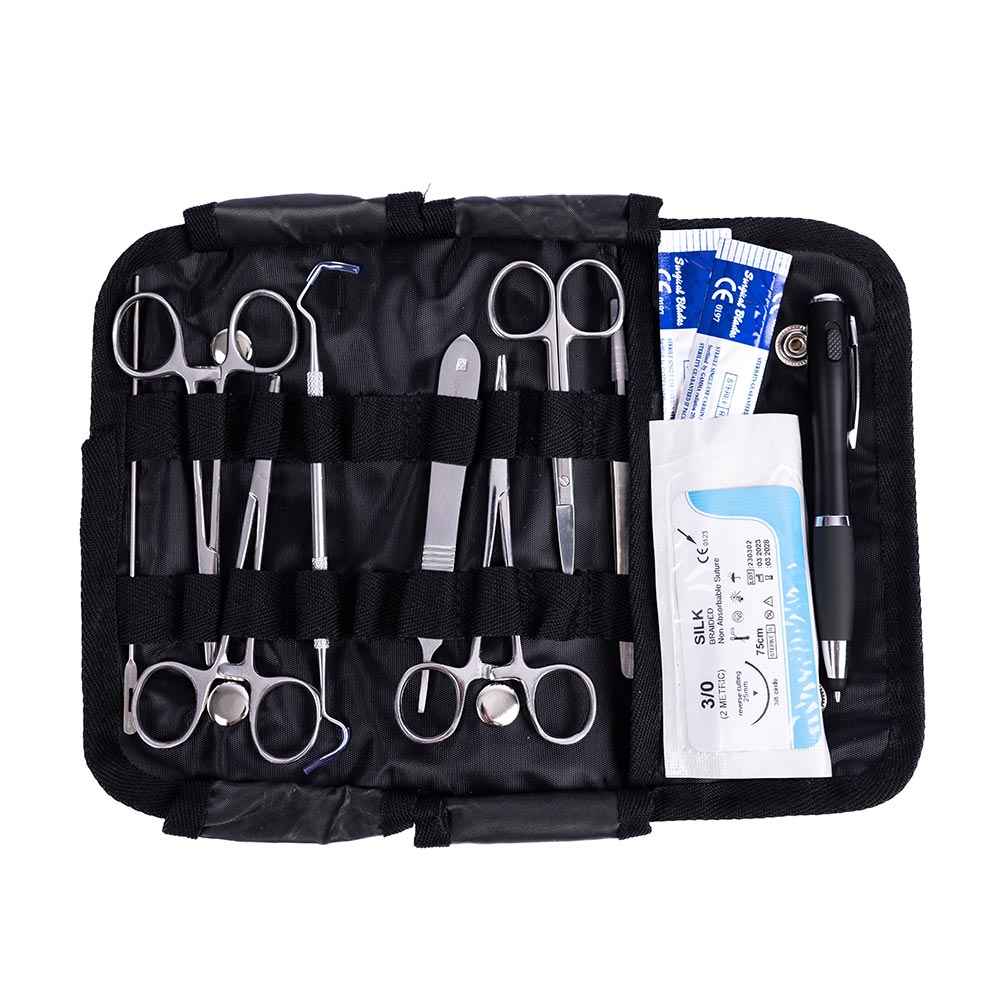
Emergency Surgical Kit by Ready Hour (12 piece)
- ✓Includes bandages, tourniquets, and antiseptics for injuries sustained during signaling attempts (mirror cuts, exertion) or rescue operations
- ✓Sterile, compact design addresses the reality that rescue may require immediate medical care before evacuation
- ✓Complements signaling tools by addressing the secondary risk: being found means nothing if bleeding or infection compromises your condition
- ✓12-piece configuration covers laceration, puncture, and wound contamination—realistic injury profiles during wilderness emergencies
- ✓Maintains effectiveness in damp conditions, unlike improvised bandaging that loses sterility
Frequently Asked Questions
Q: How far does a survival whistle carry in an emergency?
A: A quality pea whistle produces 80–120+ decibels and carries 500 yards to 1+ mile depending on terrain, weather, and background noise. In dense forest or during high wind, distance drops to 300–500 yards. The critical factor is patterned repetition over time, not distance from a single blow. Three blasts repeated every few minutes over hours increases detection probability far more than a single loud blast.
Q: What are the standard distress signals and when do you use them?
A: The international distress signal is Morse SOS (three short, three long, three short), recognized by rescue teams globally. Use this pattern when signaling for immediate help. The three-minute rule (signal for three minutes, pause for three minutes, repeat) is used when sheltering in place and waiting for active rescue operations. Both are recognized as intentional distress communication, not accidental noise.
Q: Can you rely on a whistle alone to get rescued?
A: No. A whistle is one component of a layered signaling strategy. Successful rescue requires (1) someone knowing you are missing and searching, (2) you being in a searchable location, and (3) your signal being recognized when rescuers are near. A whistle excels at drawing attention once rescuers are in the area, but it cannot initiate a search. File a trip plan, carry a mirror for daylight, and keep the whistle for active response. Together, they create a defensible signaling protocol.
Next Steps
The single most valuable action you can take today is not buying equipment—it is establishing a communication protocol with someone you trust. File a detailed trip plan (location, expected return time, landmarks, vehicle description) with a friend or family member before any wilderness travel. This creates the precondition for rescue: someone will actually come looking.
Then, assemble a simple signaling kit—a whistle, a signal mirror, and a fire-starting tool—and carry it every time you leave civilization. Practice the three-three-three pattern at home so your hands and lungs know the rhythm without conscious thought. In a real emergency, muscle memory under stress is the difference between an effective signal and panicked flailing. These skills cost nothing and take an hour to master. The gear costs less than twenty dollars. The probability they save your life is not zero.
Sources & Official Guidance
Authoritative further reading
This guide is for general informational purposes only and is not professional, medical, or safety advice. Always follow official guidance and, in a life-threatening emergency, call your local emergency number (911 in the US).
Mark Sutton, Lead Editor
Mark runs the editorial side of DoomsDayPreps. He digs into the research on emergency prep and survival gear, and checks anything safety-related against FEMA, CDC, and Red Cross guidance before it goes live.