Solar Generator for Blackouts: Sizing & EMP Protection Guide
Solar generator for blackouts: calculate your power needs, size a system correctly, and choose EMP protection. Learn before you buy.
A blackout lasting three days costs the average American household $700 in spoiled food, missed work, and fuel for backup devices. A solar generator can run your refrigerator, well pump, and communication devices indefinitely if the sun is available — but only if you've sized it correctly and protected it from the threats that cause widespread outages.
This guide teaches you how to calculate your actual power needs, understand watt-hours versus watts, and decide whether EMP shielding matters for your location and scenario. The math works the same whether you're in a rural grid-vulnerable area or a city experiencing summer strain failures.
How Solar Generators Actually Work — Watts vs. Watt-Hours
A solar generator is a battery with an inverter. The inverter converts stored DC power into the AC power your appliances need. Two numbers matter: continuous watts (how much power the generator can deliver right now) and watt-hours (how long it can deliver that power).
A 3,300-watt-hour battery with a 3,500-watt inverter means it can run a 2,000-watt load for 1.65 hours, or a 500-watt load for 6.6 hours. If you try to run a 4,000-watt load, the inverter will shut down — it cannot exceed its rated capacity, regardless of battery size.
This is the decisive difference between a generator that works and one that fails during an actual blackout: most people buy based on watt-hours alone, then discover their inverter cannot handle their refrigerator's startup surge.
A refrigerator draws 600–1,200 watts when the compressor kicks on, then settles to 100–400 watts running. A well pump pulls 1,500–3,000 watts at startup. An air conditioning window unit needs 1,000–1,500 watts continuously. If your generator's inverter is rated for 2,000 watts continuous, it can run the refrigerator or the AC unit, not both simultaneously.
The real power decision is not "how much capacity" but "what devices matter most, and in what order?"
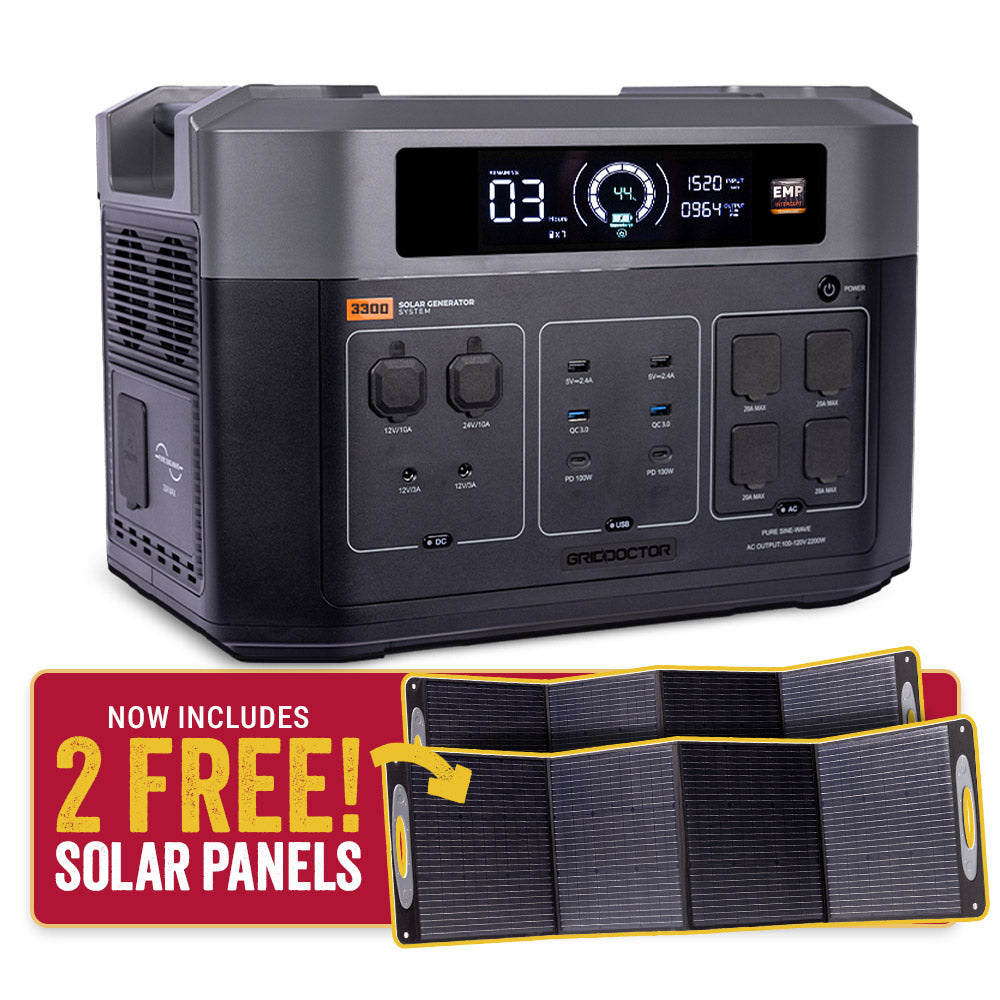
3300 Solar Generator System w/ EMP Intercept Technology + 2 FREE Waterproof 200W Solar Panels by Grid Doctor
- ✓3,500-watt inverter handles refrigerator startup surge plus continuous loads without shutdown
- ✓3,300 watt-hour capacity runs a 500-watt load for 6.6 hours or a 1,000-watt load for 3.3 hours on battery alone
- ✓Recharges fully in one day of sunlight with included 400W solar panel array (two 200W panels)
- ✓Built-in EMP-shielding circuitry protects against electromagnetic pulse from solar flares or grid events that disable standard generators
- ✓120V and 240V outlets support both household appliances and high-draw workshop tools without conversion
Power Calculation: The Step Most People Skip
Here is the practical math that determines whether your generator survives a real blackout.
Step 1: List your essential loads in priority order. During a three-day blackout, most households need (a) refrigeration, (b) lighting, (c) water supply if on a well, (d) heating or cooling depending on season, (e) medical devices.
Step 2: Find the wattage rating on each device. Do not guess. For the refrigerator, look on the back or in the manual. For a well pump, call the pump manufacturer with your model number. For lighting, add up the watts of LED bulbs you'll actually run — if you run 10 LED bulbs at 10 watts each, that's 100 watts continuous.
Step 3: Calculate the daily watt-hour demand.
- Refrigerator: 300 watts average (accounting for compressor cycles) × 24 hours = 7,200 Wh/day
- LED lighting (10 bulbs, 4 hours/day): 100 watts × 4 hours = 400 Wh/day
- Well pump (if applicable, running 2 hours/day): 2,000 watts × 2 hours = 4,000 Wh/day
- Laptop charging (100 watts × 8 hours/week): ~100 Wh/day average
Total: ~11,700 watt-hours per day for this household.
A 3,300-watt-hour battery cannot run these loads for a full day. But paired with 400 watts of solar input (the two included 200W panels), here's what happens:
Step 4: Calculate solar recharge rate.
Two 200-watt solar panels in direct sunlight produce 400 watts of power. Over a 6-hour summer day of useful sunlight (accounting for angle, cloud cover, dust), they deliver roughly 2,400 watt-hours back into the battery.
If your daytime demand is 7,600 Wh (refrigerator + lighting only, not the well pump), and solar recharges 2,400 Wh, you have a 5,200-watt-hour deficit by evening. The battery drains from full to 37% charged overnight.
This is sustainable for 2–3 days if the sun returns. If the outage extends into overcast weather, you need either a second solar array or a prioritized load list (refrigerator runs during the day only, well pump runs once daily at dawn, no air conditioning).
The skill that saves you: know your daily watt-hour demand before the blackout happens. Most people discover it during the outage, when adding more panels becomes impossible.
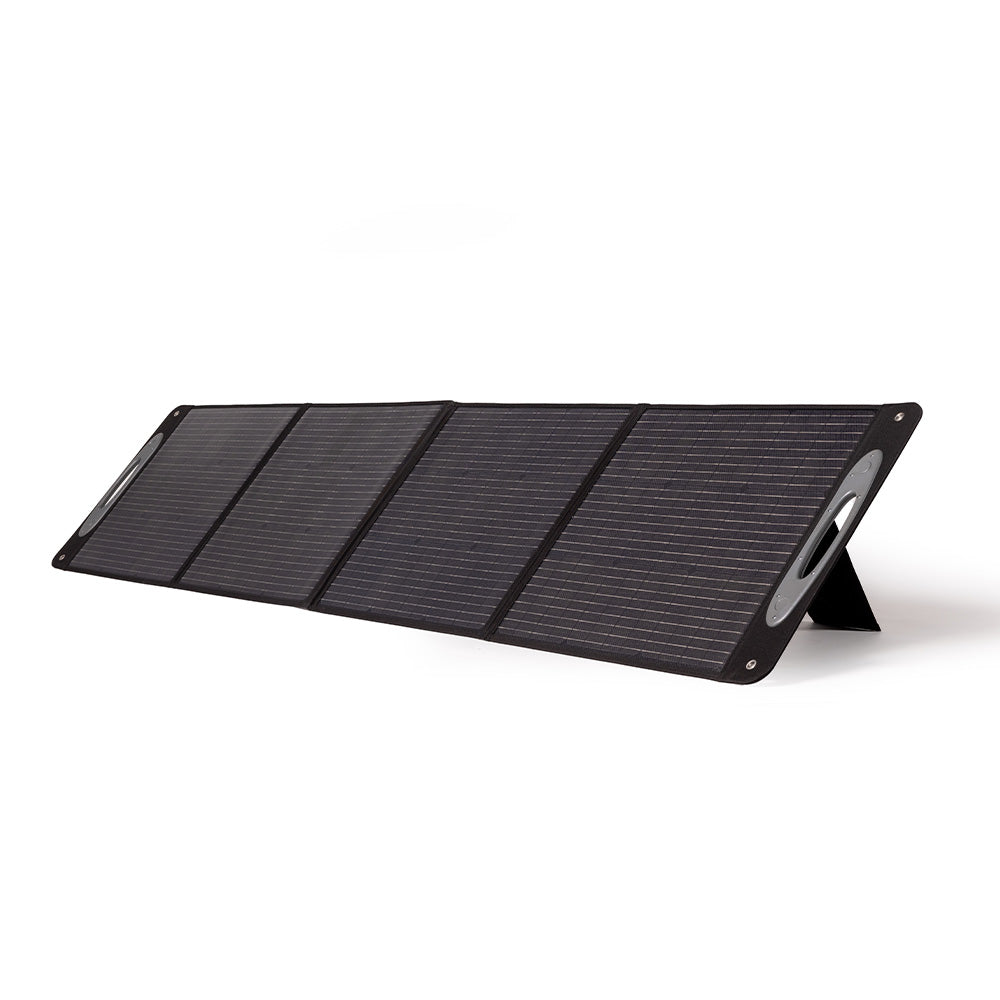
200W Waterproof Solar Panels by Grid Doctor for the 3300 & 2200 Solar Generator Systems
- ✓Each 200W panel adds 1,200 watt-hours per 6-hour day of sun (extending a 3-day outage into a 5-day sustainable scenario)
- ✓Waterproof connectors and monocrystalline cells maintain 80%+ efficiency even after exposure to rain or humidity
- ✓Daisy-chain up to four panels (800W total) to match multi-day outages or high seasonal loads
- ✓Angle-adjustable mounting brackets optimize seasonal sun angles without tools
- ✓Compatible with the 3300 system via weatherproof DC ports — no rewiring required
When EMP Protection Actually Matters — Honest Limitations
EMP shielding circuitry exists. It works by filtering voltage spikes that would otherwise fry semiconductor components in the inverter. Solar flares produce geomagnetic disturbances; high-altitude nuclear detonations produce EMP. Both are real threats — the risk question is whether they affect your scenario.
EMP protection matters if:
- You live in a rural area where the grid is vulnerable to cascade failures triggered by solar weather
- You're preparing for a multi-week scenario where grid restoration is genuinely uncertain
- Your region has experienced repeated outages from geomagnetic events (the Pacific Northwest and upper Midwest see these)
EMP protection is overkill if:
- Your blackout scenario is summer heat strain or a local transformer failure — these do not generate EMP
- You can shelter the generator indoors in a grounded metal cabinet during a solar event (passive Faraday shielding)
- You're planning for 3–7 day outages and replacing the device after 5 years anyway
The honest trade-off: EMP-shielded generators cost 15–20% more. A Faraday bag for your generator costs $200–400 and provides equivalent protection. If you're buying a generator anyway, built-in EMP filtering adds security without bulk or awkwardness. If you're buying a cheap unit and want protection, a Faraday bag is the smarter choice.
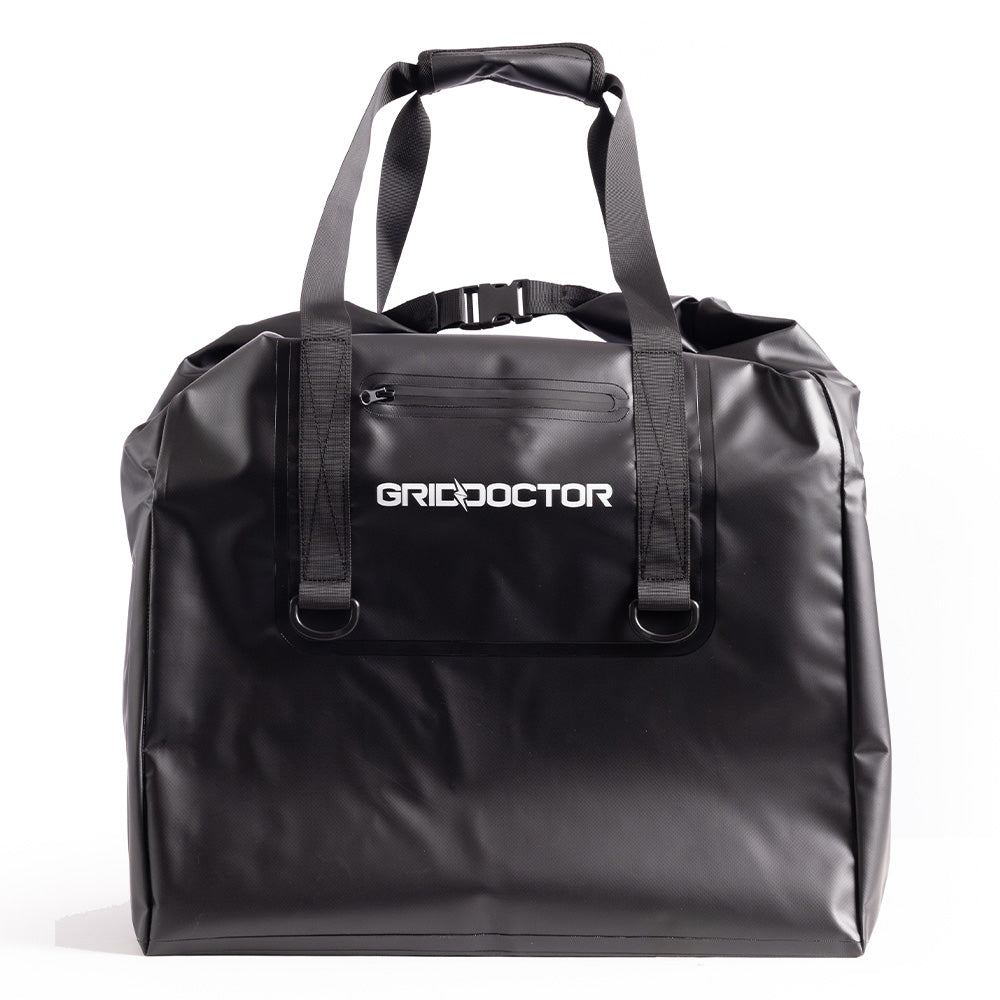
Large Faraday EMP Bag for the 3300 & 2200 Solar Generators by Grid Doctor (110 Liter)
- ✓110-liter capacity holds the 3300 generator plus cables and one 200W panel with room to spare
- ✓Multi-layer conductive fabric reflects electromagnetic pulses before they reach the internal electronics
- ✓Sealed zippers and seams meet passive shielding standards (does not require grounding)
- ✓Stored generator can be deployed in under 2 minutes once removed from the bag
- ✓Weatherproof exterior protects against dust and humidity whether stored in a garage, shed, or vehicle
What Solar Generators Cannot Do — And When You Need a Backup Plan
A solar generator is not a replacement for grid power — it is a bridge that keeps essential systems running for 3–7 days. Understand what breaks this bridge.
Multi-day cloud cover kills solar recharge. If an outage coincides with a rainy weather pattern lasting 4+ days, your battery depletes and you're down to the watt-hours stored. A 3,300 Wh battery running 1,000 watts continuous lasts 3.3 hours, then you have nothing.
High-amperage loads consume the battery fast. A 240-volt welder draws 40–50 amps; a tankless water heater draws 100+ amps. A solar generator with a 3,500-watt inverter cannot run these devices, and even if it could, the battery would drain in minutes. This is a hard design limit, not a feature upgrade.
Surge loads from motors cause shutdowns. Many AC units and well pumps draw 2–3× their rated running wattage during startup. If your generator's inverter is sized at exactly your device's rated wattage, the surge will trigger a shutdown. You need 50% headroom above your peak simultaneous load.
The generator itself can fail. Battery cells degrade. Inverters fail. USB ports break. In a two-week outage, a failed charge controller strands you with a dead battery and no way to recharge. This is why the skill matters more than the device: know how to manually manage loads, understand the limits, and have a secondary power source (a small gas generator, a car battery with an inverter, a hand-crank charger).
A solar generator is the right choice for daily-use outages and seasonal load management, but it is not a complete survival solution. It assumes you have sunshine and the ability to rest your loads when the battery depletes.
Frequently Asked Questions
Q: How many watts do I need in a solar generator for a blackout? A: Start with your refrigerator (300–600 watts continuous), add lighting (50–200 watts), and any other essentials like a well pump (1,500–2,500 watts startup surge). If you need to run a 2,000-watt load continuously, buy a generator with at least a 3,000-watt inverter (not just a 3,000-watt-hour battery). Calculate your daily demand in watt-hours, not watts, to size the battery correctly.
Q: How long can a solar generator run essential devices during a power outage? A: A 3,300 watt-hour battery runs a 500-watt load for 6.6 hours, or a 1,000-watt load for 3.3 hours. With two 200-watt solar panels recharging during daylight, you can sustain 5,000–7,000 watt-hours of daily use indefinitely if the sun cooperates. Cloudy weather or high-amperage loads shorten this dramatically.
Q: Do I really need EMP protection for a solar generator? A: EMP shielding built into the generator protects against geomagnetic solar flares and electromagnetic pulse from high-altitude detonations. It is worthwhile insurance if you live in a rural grid-vulnerable area or are planning for multi-week restoration scenarios. For typical summer blackouts, a Faraday bag (passive shielding) is cheaper and equally effective.
Next Steps
Calculate your actual daily watt-hour demand using the three-step method above. Do not estimate — open device manuals, call manufacturers, and write down the numbers. Once you know your demand, you know whether a 3,300 watt-hour system is sufficient alone or whether you need additional panels, a second battery, or a prioritized load list for extended outages.
The device itself matters less than the planning you do before the blackout. A properly sized system with realistic load expectations will work. An undersized system with optimistic expectations will fail when you need it most.
Sources & Official Guidance
Authoritative further reading
This guide is for general informational purposes only and is not professional, medical, or safety advice. Always follow official guidance and, in a life-threatening emergency, call your local emergency number (911 in the US).
Mark Sutton, Lead Editor
Mark runs the editorial side of DoomsDayPreps. He digs into the research on emergency prep and survival gear, and checks anything safety-related against FEMA, CDC, and Red Cross guidance before it goes live.