Tourniquet and Trauma Dressing: When to Use in Bleeding Emergencies
Learn when and how to use tourniquets and trauma dressings in bleeding emergencies. Master the skills before buying a kit.
Severe bleeding kills faster than most other injuries. A person can lose consciousness from blood loss in under three minutes and die within five to ten minutes if an arterial bleed goes untreated. The difference between panic and survival in a bleeding emergency is knowing which tool to reach for—and having already practiced using it before you need it.
This article teaches you the mechanism behind tourniquets and trauma dressings, the step-by-step application process, and how to recognize when each tool is the right choice. By the end, you'll understand not just what these tools do, but why they work and when to deploy them.
How Severe Bleeding Stops: The Mechanism
Severe bleeding falls into two categories: venous and arterial. Veins carry blood back to the heart under low pressure—if a vein is cut, blood flows steadily but not explosively, and direct pressure usually controls it within seconds to minutes. Arteries carry blood away from the heart under high pressure—if an artery is severed, blood sprays or pulses outward, and direct pressure alone often fails to stop it before shock sets in.
A tourniquet works by occluding—completely blocking—blood flow through an entire limb. It does this by applying circumferential pressure above the wound, squeezing the limb tissue hard enough to collapse both arteries and veins. The key word is above: the tourniquet must sit between the wound and the heart, interrupting the arterial supply before blood can reach the injury.
A trauma dressing, by contrast, uses direct pressure and often an elastic wrap to apply force specifically at the wound site. It controls venous and slower arterial bleeding by promoting clot formation and preventing blood from escaping the vessel. It works at the site of injury, not above it.
The critical difference: a tourniquet stops all blood flow to the limb below it—which preserves life in the first minutes of catastrophic arterial bleeding but causes tissue damage if left on too long. A trauma dressing preserves some circulation and works for slower bleeds, but cannot stop a severed artery.
When a Tourniquet is the Right Choice
Use a tourniquet when:
- Blood is spurting or pulsing (arterial bleed)
- Bleeding does not slow after 30–60 seconds of direct pressure with a standard dressing
- The wound is on the lower leg, upper leg, arm, or forearm (places where a tourniquet can achieve a secure fit)
- You cannot see the wound clearly enough to apply a dressing (such as when clothing is in the way)
Do not use a tourniquet on the torso, neck, or groin—tourniquets cannot be applied effectively to these areas, and direct pressure is the only option.
Application steps:
-
Position the tourniquet. Slide it onto the limb 2–3 inches above the wound, or as high up the limb as the anatomy allows (for below-knee wounds, place it on the upper calf; for below-elbow wounds, place it on the upper forearm). Never place it directly over a joint.
-
Tighten until bleeding stops. Rotate or pull the tourniquet tighter until you no longer see blood flowing from the wound. This is not a comfortable pressure—it should feel very tight. If bleeding continues, tighten more.
-
Secure the tail. Lock the tourniquet in place so it cannot loosen during movement or transport. Many tourniquets include a hook-and-loop strap or windlass mechanism that locks automatically.
-
Note the time. Write the application time directly on the tourniquet with a marker or pen, or on the patient's skin near the tourniquet. Do not rely on memory—hospitals need to know how long the tourniquet has been in place to assess tissue damage risk.
-
Keep the limb still. Do not massage or manipulate the limb below the tourniquet; this increases pain and can dislodge any clot that is beginning to form.
Once a tourniquet is on, the goal is to reach definitive medical care (a hospital with surgical capability) as quickly as possible. Do not remove it yourself unless you are trained in field medicine and have a specific reason to.
Trauma Dressings: The Standard for Controllable Bleeding
Use a trauma dressing when:
- Bleeding is steady but not spurting (venous or slower arterial)
- You can see the wound and apply direct pressure
- The wound is on the torso, neck, or areas where a tourniquet cannot be placed
A trauma dressing typically includes:
- A thick pad (usually 4 inches × 4 inches or larger) that makes direct contact with the wound
- An elastic wrap or adhesive backing that holds pressure in place
- Enough material to cover the wound completely and extend slightly beyond it
Application steps:
-
Control initial bleeding. Apply firm direct pressure with your hand, a standard cloth, or a pad for 30–60 seconds. Do not lift and look repeatedly—keep pressure steady.
-
Position the trauma dressing. Place the thick absorbent pad directly over the wound. If blood soaks through the first layer, do NOT remove it—place a second dressing on top. Removing the first dressing disrupts clot formation.
-
Apply the elastic wrap. Wrap the elastic backing or bandage around the limb or torso firmly enough that you cannot easily slide a finger under it. The wrap should provide continuous pressure across the entire dressing, not just at one edge.
-
Check circulation below the dressing (limb wounds only). For arm or leg wounds, check that the fingers or toes are warm, their normal color, and that the person can feel touch below the dressing. If they are numb, cold, or pale, the wrap is too tight—loosen it slightly.
-
Keep the dressing dry and secure. If the person will be mobile or if transport takes longer than an hour, reinforce the wrap with tape to prevent it from shifting.
Trauma dressings can stay in place for hours without tissue damage, unlike tourniquets. If bleeding restarts after the initial application, you have not applied enough pressure—tighten the wrap or add a second dressing.

ARB Trauma Pak III with Dressing and SWAT Tourniquet - Emergency First Aid Solution
- ✓Contains both SWAT tourniquet and Israeli-style pressure dressing—the two tools you just learned to apply
- ✓SWAT tourniquet uses a windlass mechanism that locks securely and is one-handed applicable in high-stress situations
- ✓Designed for the bleeding scenario you cannot control with standard first aid—arterial bleeds and wounds in high-movement areas
- ✓Includes a pre-positioned pressure dressing with elastic wrap, eliminating the step of sourcing materials separately
- ✓Compact enough for a vehicle kit, backpack, or home emergency box; professional-grade quality matches hospital trauma protocols
The Math: Tissue Damage Timeline
Tissue below a tourniquet begins to suffer damage after 2 hours of continuous application. At 6 hours, the risk of permanent nerve and muscle damage increases significantly. After 8–12 hours, amputation becomes a realistic outcome even with surgical intervention.
This timeline assumes:
- A healthy adult with normal circulation
- A properly applied tourniquet (fully occluding blood flow)
- No additional medical complications
A person with diabetes, peripheral artery disease, or who is in shock may tolerate less time. Children tolerate slightly longer. The exact threshold varies by individual, but the principle is universal: a tourniquet is a temporary measure to preserve life during transport, not a permanent solution.
The reason for noting the time on the tourniquet: emergency physicians use this information to decide whether to attempt limb salvage or prepare for amputation. A 90-minute tourniquet application followed by rapid surgery offers a very different prognosis than a 4-hour application.
Calculation for casualty load: In a mass-casualty scenario (multiple injured people), knowing tourniquet application times helps you triage. The person with a 45-minute tourniquet can be treated after the person with a 3-hour tourniquet and still have a better outcome. This is why time notation matters more than most preppers realize.
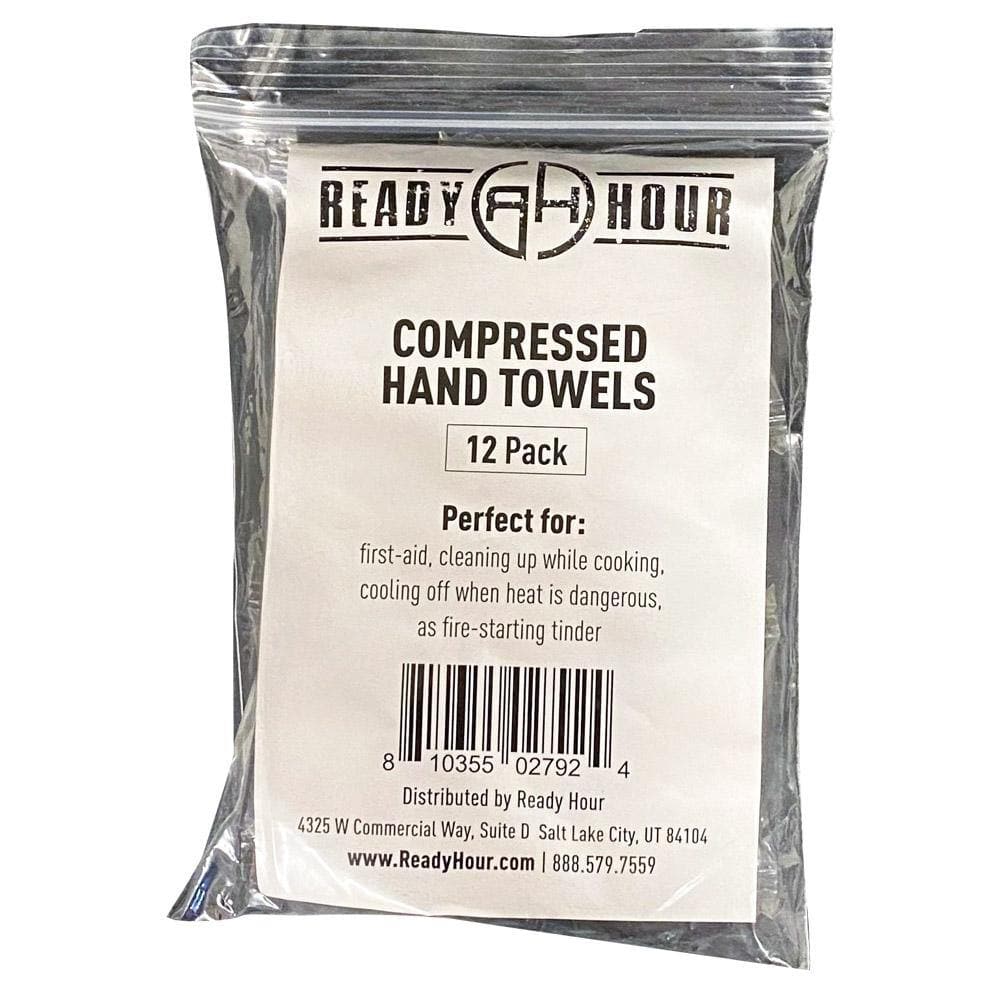
Compressed Disposable Hand Towels
- ✓Expand when wetted and provide absorbent surface for initial pressure application before deploying a trauma dressing
- ✓Single compressed towel expands to full size; compact storage means 10–20 towels fit in a small bag
- ✓Essential for scenarios where you have multiple bleeding injuries or need to control bleeding at two sites simultaneously
- ✓Unlike cloth rags, disposable towels are sterile and prevent cross-contamination between the wound and your hands
- ✓Keep in vehicle, home kit, and workplace emergency box—they cost pennies but are often the first step before advanced dressings
The Honest Limitations: When These Tools Are Not Enough
A tourniquet or trauma dressing buys time—it does not fix the underlying injury. If a person has lost a limb, severed an artery that retracts into the abdomen, or has a wound so large that no dressing can contain it, these tools slow bleeding but cannot stop it. In those cases, the limiting factor becomes reaching surgical care, not the quality of your first aid kit.
Tourniquets also fail in specific scenarios:
- Groin or buttock wounds: A tourniquet cannot be applied high enough because of anatomy; tourniquets slip off or fail to occlude blood flow.
- Wounds around joints: Placing a tourniquet over the knee or elbow compresses the joint unevenly and can miss the major vessels on the opposite side.
- Penetrating chest wounds: Even a massive trauma dressing cannot seal a sucking chest wound if the object is still embedded; the tourniquet does nothing to address internal bleeding.
Pressure dressings fail when:
- The wound is too large for the dressing to cover
- Bleeding restarts because the initial pressure was insufficient
- The person continues high-intensity movement that disrupts clot formation
For torso wounds, neck wounds, and groin wounds, direct hand pressure is often your only option until surgical care arrives. A prepper's responsibility is to master hand pressure technique as thoroughly as tourniquet and dressing application—it is less dramatic but equally critical.

Arb Sportsman 200 First Aid - Kit 1-4 Ppl 1-4 Days
- ✓Expands beyond trauma management to include blister care, infection prevention, and pain management for extended scenarios
- ✓Covers 1–4 people for 1–4 days, making it practical for camping, backcountry, or short-term grid-down situations
- ✓Includes multiple dressing sizes and gauze pads so you can address the slow bleeds and minor injuries that often outnumber trauma cases
- ✓Organized in a compartmented bag that lets you locate specific items without dumping the entire contents
- ✓Better for stationary scenarios (home, cabin, vehicle) where you have space; complement with the Trauma Pak for rapid-response capability
FAQ
Q: How do you apply a tourniquet correctly to stop severe bleeding?
A: Slide the tourniquet 2–3 inches above the wound on the limb, away from any joints. Tighten it until bleeding stops completely—this is not a light pressure, it should feel very tight on the limb. Lock the tourniquet in place and immediately write the time on it with a marker or pen. Do not remove it yourself; keep the limb still and seek medical care.
Q: What's the difference between a tourniquet and a pressure dressing?
A: A tourniquet completely blocks all blood flow to the entire limb below it and works for arterial bleeds that do not respond to direct pressure. A trauma dressing applies localized pressure at the wound site and preserves some circulation; it works for venous and slower arterial bleeds. Tourniquets cause tissue damage after 2+ hours; dressings can stay on indefinitely. Tourniquets apply above the wound; dressings apply directly at it.
Q: How long can someone safely wear a tourniquet before tissue damage occurs?
A: Tissue damage begins after approximately 2 hours of continuous tourniquet application in a healthy adult. At 6 hours, permanent nerve and muscle damage becomes likely. After 8–12 hours, amputation risk is high even with surgical intervention. This timeline varies by age, circulation quality, and overall health—diabetics and elderly persons may tolerate less time. The key is to note the application time and reach surgical care as quickly as possible.
Conclusion
The most effective trauma kit you own is the one you have practiced using before an emergency. Owning a tourniquet and pressure dressing is only half the skill—you must understand the bleeding mechanism, know when to deploy each tool, and be able to apply them under stress with trembling hands and poor visibility.
Start by reading the instructions for whatever kit you assemble. Then, practice the application sequence without blood and without time pressure. Practice on a friend's arm or your own leg until you can apply a tourniquet one-handed and secure a trauma dressing firmly in under 30 seconds. Once you have muscle memory, you are ready to assemble your kit and store it where you actually are—vehicle, home, workplace—not in a closet you forget about. The best survival tool is the one you carry, know how to use, and have already used in training.
Sources & Official Guidance
Authoritative further reading
- Ready.gov — Build A Kit
- FEMA — Emergency Preparedness
- American Red Cross — First Aid
- CDC — Emergency Preparedness & Response
This guide is for general informational purposes only and is not professional, medical, or safety advice. Always follow official guidance and, in a life-threatening emergency, call your local emergency number (911 in the US).
Mark Sutton, Lead Editor
Mark runs the editorial side of DoomsDayPreps. He digs into the research on emergency prep and survival gear, and checks anything safety-related against FEMA, CDC, and Red Cross guidance before it goes live.

