Water Filtration for Emergency Preparedness: Capacity Math & Contaminant Removal
Learn how water filtration works in emergencies and calculate your family's 30-day water purification needs. Practical math included.
When the tap stops flowing, you have three days before dehydration becomes a medical emergency. But most preppers store water without understanding what contaminants their filter actually removes — or how many filters they'll need. This article teaches you the math of water filtration, how activated carbon works at the molecular level, and exactly when a pitcher filter becomes your best solution versus when you need a larger system.
How Activated Carbon Filtration Works
Water contamination happens through three main pathways: particulate (sediment, rust), chemical (chlorine, pesticides, heavy metals like lead), and microbial (bacteria, protozoa). A pitcher filter addresses only the first two.
Activated carbon works through a process called adsorption — not absorption. The carbon is "activated" by heating it to create millions of microscopic pores that act like a sponge at the molecular level. When contaminated water passes through, certain molecules cling to the carbon surface through weak electrostatic attraction. Chlorine and chloramine (municipal water disinfectants) bind readily to activated carbon; so do volatile organic compounds (VOCs) like pesticides and industrial solvents. Lead ions are also trapped — not chemically neutralized, but physically held on the carbon's surface until the filter reaches capacity.
Here's the critical limit: activated carbon does NOT remove bacteria, viruses, or parasites. Those organisms are too large to be adsorbed and pass straight through. If your water source is microbially contaminated — a stream, floodwater, or sewage-compromised supply — a pitcher filter alone is insufficient. You need either boiling (rolling boil for 1 minute at sea level), a microbial-rated system (ceramic or ultrafiltration), or chemical disinfection (bleach, iodine tablets).
For municipal tap water cut off from treatment but not contaminated by sewage or surface water, a carbon pitcher filter removes taste and odor problems plus chlorine residues. For well water or surface water during a prolonged grid-down scenario, you need a multi-stage approach.
Calculating Your 30-Day Filtration Capacity
Start with baseline water consumption. The standard is 1 gallon per person per day for drinking and cooking. During heat stress, exertion, illness, or if cooking requires more water, consumption rises to 1.5–2 gallons per person per day. Children ages 4–8 need roughly 0.75 gallons daily; teenagers and adults, 1–1.5 gallons.
The math for a family of four over 30 days:
- 4 adults × 1 gallon/day × 30 days = 120 gallons minimum
- At higher consumption (1.5 gal/day): 4 × 1.5 × 30 = 180 gallons
A single pitcher filter rated for 100 gallons covers 30 days for a family of four at baseline consumption, but only if that pitcher is your sole water source and every gallon runs through it. In a realistic scenario, you'll have some stored water that doesn't need filtering (backup supply), so one filter may stretch across multiple family members and longer timeframes.
| Family Size | Days | Baseline (gal) | High Use (gal) | Filters Needed (100gal ea.) |
|---|---|---|---|---|
| 2 adults | 30 | 60 | 90 | 1 |
| 4 adults | 30 | 120 | 180 | 1–2 |
| 2 adults + 2 children | 30 | 80–100 | 120–150 | 1–2 |
| 6 adults | 30 | 180 | 270 | 2–3 |
Replace the filter when:
- Flow slows noticeably (typically after 100 gallons of actual filtered water)
- Taste or odor returns despite the filter appearing clean
- The rated capacity is reached, even if flow seems acceptable
A 100-gallon filter rating assumes average municipal tap water. Heavily sediment-laden water or water with high chlorine levels clogs the filter faster and reduces effective capacity to 50–75 gallons.
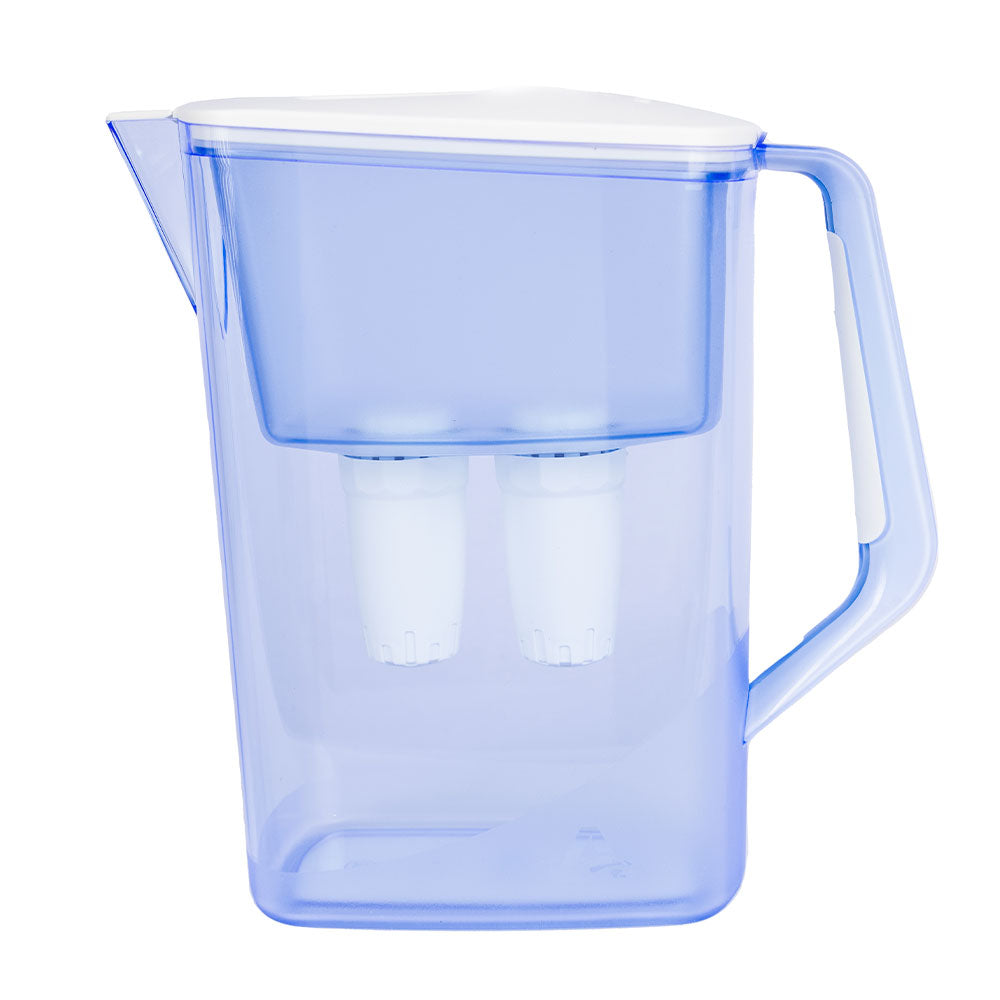
Alexapure Pitcher Water Filter (10 cup)
- ✓Activated carbon media removes chlorine, lead, and chemical taste while water passes through the 10-cup reservoir
- ✓Single filter provides 100 gallons of capacity — enough for one adult for 100 days or a family of four for roughly 25–30 days at baseline consumption
- ✓Pitcher design works without electricity, making it functional during grid-down scenarios when tap pressure may be low
- ✓Rated for lead reduction in municipal water; does not remove bacteria or viruses — unsuitable as sole treatment for surface water or sewage-contaminated supplies
- ✓Replacement cycles are simple to track: mark the install date on a label and replace after 100 gallons or three months, whichever comes first
Real-World Contaminant Removal — What This Filter Actually Does and Doesn't
The EPA requires water filter manufacturers to state which contaminants they reduce and by what percentage. The Alexapure Pitcher is tested to reduce:
- Chlorine and chloramine: 99%+ removal — these are what make tap water taste like a swimming pool and can trigger flavor fatigue in stored water
- Lead: 99%+ reduction — critical if your municipal supply has aging pipes (pre-1986 homes, many urban areas)
- Other chemical tastes and odors: benzene, trichloroethylene (TCE), and similar VOCs that affect potability without causing acute toxicity
What it does NOT reduce:
- Bacteria (E. coli, Legionella)
- Viruses (enteroviruses, hepatitis A)
- Protozoa (Cryptosporidium, Giardia)
- Fluoride (if your community fluoridates, fluoride stays in the water)
- Dissolved minerals (hardness, sodium)
- Nitrates (a concern in agricultural areas)
If your emergency scenario involves a surface water source — stream, pond, rainwater — or if your municipal supply is suspected of contamination from a main break or sewage intrusion, you cannot rely on a carbon pitcher alone. You need boiling, chemical disinfection, or a microbial-rated filter (ceramic, hollow-fiber ultrafiltration, or reverse osmosis).
Practical Limitations — When a Pitcher Filter Falls Short
A carbon pitcher is fast (10-cup fill takes 15–30 minutes depending on source water quality) and requires no maintenance beyond filter replacement. But it has real constraints:
Flow rate dependency: If your municipal water pressure drops during a crisis — common after earthquakes, flooding, or main breaks — a pitcher works only if you can fill it manually from a bathtub or bucket. It will not produce water from a dead line.
Single-use pathways: Once the filter reaches 100 gallons, it stops removing contaminants. You cannot "stretch" a filter; you either have a replacement or you don't. For a 30-day emergency with a family of four, you need at least two filters on hand.
No residual disinfection: A pitcher removes chlorine taste but produces no residual protection during storage. Filtered water stored in the pitcher for more than a few hours can develop microbial growth if the pitcher is not refrigerated. Store filtered water in separate clean containers with a food-grade cover.
Not suitable for visibly contaminated water: If the source water contains sediment, rust, or visible particles, a carbon filter will clog within days. Pre-filter through cheesecloth or a coffee filter first.
For scenarios requiring higher volume (6+ people), longer duration (60+ days), or unknown source water quality, the Alexapure Pro system addresses these gaps with a larger capacity and additional filtration stages.
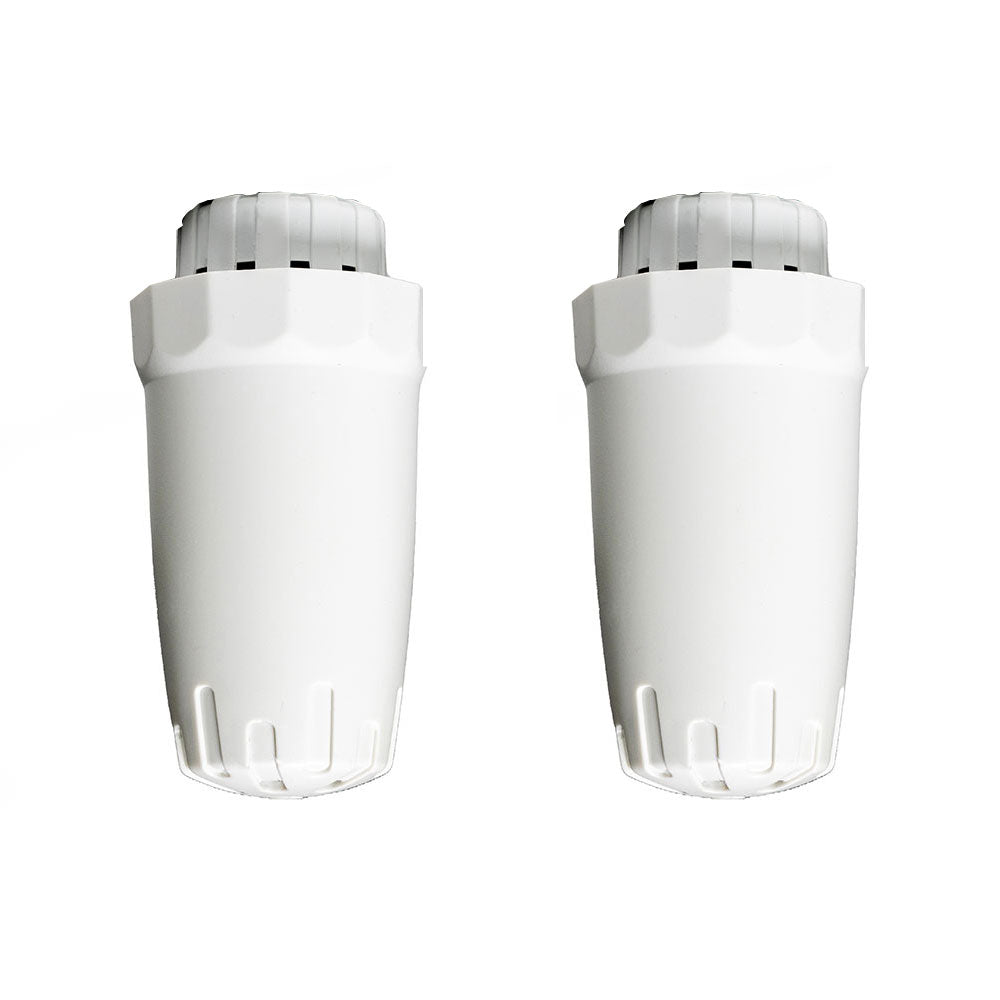
Alexapure Pitcher Genuine Replacement Water Filters | 2-Pack
- ✓Genuine activated carbon cartridges guarantee the same 99%+ chlorine and lead reduction as the original filter — generic replacements may underperform
- ✓Two filters provide 200 gallons combined capacity, covering a family of four for roughly 50–60 days at baseline consumption
- ✓Filters maintain proper fit and sealing in the Alexapure Pitcher housing; inferior cartridges can develop bypass leaks around the edges
- ✓2-pack format reduces the cost-per-filter and ensures you have a backup when the first filter reaches capacity
- ✓Store in a cool, dry location — activated carbon can absorb odors from the environment, so keep filters away from gasoline, solvents, or strong-smelling substances
Extending Filter Life and Maximizing Capacity
Filter capacity degrades fastest when the source water contains sediment or high chlorine loads. To stretch your filter's life:
Pre-filter visibly contaminated water. If filling from a bucket after a flood or from a stream, pass the water through a coffee filter or piece of cheesecloth first. This removes particles that would clog the carbon cartridge and reduces filter saturation time.
Store water before filtering. If you have municipal tap water available during the crisis window, fill clean containers and let sediment settle for several hours, then pour the clearer water into the pitcher. This is faster and uses less filter capacity than rushing to filter every gallon.
Rotate filter use. If you have two filters, use one while the other is resting. Activated carbon can rebound slightly if allowed to dry (a small fraction of trapped compounds evaporate), though this doesn't restore full capacity. The real benefit is preventing accidental damage to a single filter during handling.
Track capacity in writing. A typical pitcher filter lasts 100 gallons or approximately three months of normal use, whichever comes first. Write the install date on the filter housing with a permanent marker. If you reach 100 gallons first, replace it — even if three months haven't elapsed. Don't guess.
Household Water Filtration Strategy — Pitcher vs. Larger Systems
A pitcher filter is best for:
- Small households (1–2 people)
- Short-term emergencies (up to 30 days for a family of four)
- Municipal tap water with taste/odor issues but no known microbial contamination
- Situations where you already have stored water as backup
A larger system like the Alexapure Pro is better for:
- 5+ person households
- Grid-down scenarios lasting 60+ days
- Well water or surface water sources
- Situations where you may need to filter larger batches at once
The pitcher is your daily-use filter for a crisis. The larger system is your insurance policy for extended outages or unknown water sources.

Alexapure Pro Water Filtration System
- ✓Multi-stage filtration includes carbon, sediment, and mineral filtration media in a larger 5-gallon capacity — suited for household-scale use during extended outages
- ✓Gravity-fed design requires no electricity or pressure; water moves through the filter stacks at its own speed
- ✓Rated for high-sediment water and surface sources, making it suitable for streams or floodwater (though microbial risk still requires boiling or additional chemical disinfection for untreated sources)
- ✓5-gallon capacity means fewer refill cycles and faster production during high-use scenarios like illness or cooking
- ✓Metal spigot and durable housing withstand repeated use and rough handling during emergency conditions
Frequently Asked Questions
Q: How many gallons of water does one person need for 30 days? A: The baseline is 1 gallon per person per day for drinking and cooking, totaling 30 gallons for one person over 30 days. If exertion, heat, illness, or cooking water needs are higher, plan 1.5 gallons per day (45 gallons over 30 days). Children ages 4–8 need roughly 0.75 gallons daily. A single 100-gallon pitcher filter covers one adult for 100 days or a family of four for approximately 25–30 days.
Q: What contaminants does activated carbon actually remove from tap water? A: Activated carbon removes chlorine, chloramine, lead, and volatile organic compounds (VOCs) like pesticides and industrial chemicals that cause taste and odor problems. It does NOT remove bacteria, viruses, protozoa, fluoride, or dissolved minerals. If your water source is a stream, floodwater, or known to be microbially contaminated, boil the water (rolling boil for 1 minute) or use a microbial-rated filter after carbon filtration.
Q: How long does a water filter pitcher last before the filter needs replacing? A: A standard activated carbon filter is rated for 100 gallons of filtered water or approximately three months of normal use, whichever comes first. Once the filter reaches capacity, it stops removing contaminants and must be replaced. Water flow slowing is a sign you're nearing capacity. Mark the install date on the filter with a permanent marker and replace it after 100 gallons or three months to maintain consistent performance.
Conclusion
Water filtration is the bridge between emergency water storage and actual drinking safety. A pitcher filter removes chlorine taste and reduces lead from municipal water but cannot treat bacteria, viruses, or unknown contaminants. Calculate your family's 30-day consumption (baseline 1 gallon per person per day), estimate the number of filters you'll need, and buy replacement cartridges now while they're available. Store filters in a cool, dry place away from odors, and mark the installation date when you deploy one. If you live in an area with aging pipes, high chlorine treatment, or potential surface water reliance, start with a pitcher filter for municipal backup and a larger system for extended outages or well water sources.
Sources & Official Guidance
Authoritative further reading
This guide is for general informational purposes only and is not professional, medical, or safety advice. Always follow official guidance and, in a life-threatening emergency, call your local emergency number (911 in the US).
Mark Sutton, Lead Editor
Mark runs the editorial side of DoomsDayPreps. He digs into the research on emergency prep and survival gear, and checks anything safety-related against FEMA, CDC, and Red Cross guidance before it goes live.